-
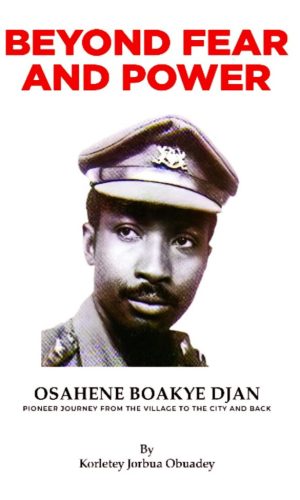
Beyond Fear and Power: Osahene Boakye Djan – Pioneer Journey from the Village to the City and Back
On 2nd June, 1979, the military high command of the Ghana Armed Forces picked up intelligence of an impending coup against their regime from the 5 Battalion, the only fighting unit in Accra at the time.
General Odartey Wellington, the then Army Commander, informed his lower commanders to take steps to order Captain Boakye Djan, the D Company Commander of the 5 Battalion of Infantry to stop it.
On 4th June, 1979, Captain Boakye Djan emerged to become the substantive head of government and official spokesperson of the Armed Forces Revolutionary Council of Ghana.
This is the story of one of Africa’s great military masterminds and why he has survived it all.
₵150.00 -
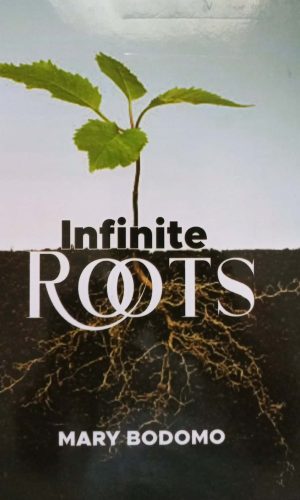
Infinite Roots
“I must tell you my history,” Baba would roar, “the history you learn at school is not better than that which I have to tell you. My history concerns you directly, it is who you are, what you are, and what you’re going to become.”
“…woven in an unbroken thread of prose…in a complex, digressive narrative that is like a set of Chinese boxes (or those Russian Matryoshka dolls), one laid inside another.” — Literary Review
Infinite Roots follows the multi-generational story of a Ghanaian military family, composed through the eyes of a young daughter learning about her history and culture through the many stories of her parents and elders. This autobiographical novel spreads out across the 60s and 80s Ghana as the military family journeys from Wa to Tamale to Accra to Kumasi to Takoradi to Ho and more. As the young girl grows, she also begins to share her own re-tellings as her elders once did.
“…it is an incredible survey of Ghanaian traditions, customs, superstitions and beliefs, as well as social and political history and the emergence of female education.” — Lee Oliver
₵80.00₵100.00Infinite Roots
₵80.00₵100.00 -
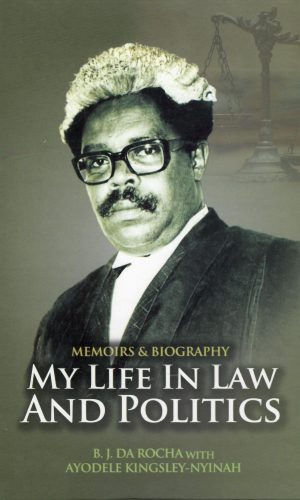
My Life in Law and Politics: Memoirs & Biography of B.J. da Rocha
This book chronicles the life of B.J. da Rocha as a lawyer and politician. B. J., as he was popularly known, was a legal luminary and politician extraordinaire. Born on May 16th 1927, he devoted the entire course of his professional life to entrenching the rule of law, development of legal education, and in the defence of human rights till his death on the 23rd of February 2010.
He was noted for forthrightness, integrity and principled stance on issues on the rule of law and national development.
He played various prominent roles in Law and Politics as a lawyer, director of legal education, law lecturer and first Chairman of the New Patriotic Party.
This account is related by B.J. himself in Part 1, followed by an Epilogue based on interviews B.J. conducted with Mr. Dei, a student of history, for his dissertation.
This book is an exciting read for students of political history in Ghana and is an insightful commentary on Ghana’s chequered political history.
“Here was a man, when comes such another” — Shakespeare, Julius Caesar
₵160.00 -
…Power to the People: Reflections on Retrogressive Politics
Published in 1984…Power to the People is a doctor’s medicine for Ghana’s ills. The pill is occasionally bitter, but is coated with a generous layer of therapeutic laughter, to help its message slide gently into the appropriate organs of the national digestive system.
Presented in the form of prose, poetry and cartoons, the first part of the book, subtitled The Past, covers the Nkrumah, Kotoka, Afrifa & Ankrah, Busia, Acheampong & Akuffo, Rawlings 1979 and Limann eras. The second part, subtitled The Present, covers the first three years of the second coming of Rawlings.
In a satirical treatment of our history over almost 30 years, this book sheds a great light onto the paths that Ghana traversed in those heady years, in a form that is easy to read, reflect on and learn.
In the author’s own words, “in recording these…my hope is that others would be induced to ponder over and question loudly some of those short-comings, lapses and omissions in our national character and situation which are stifling our growth and retarding the country’s progress. If our questions get loud and irritating enough to cause discomfiture in our policy makers, then the reader wouldn’t have been bored for nothing.”
₵65.00 -
The First Vice President: A Biography of JWS de Graft-Johnson (Hardcover)
In the late 1970s, Joe de Graft-Johnson appeared on the national political scene as an Association of Recognized Professional Bodies executive, overlapping with his tenure as president of the Ghana Institution of Engineers. During this time, Joe actively demonstrated against the socioeconomic decline and lack of regard for professional guidance by the military regime. Joe subsequently won the People’s National Party’s nomination and became the Republic’s Vice President in 1979. Before this, he had transformed the Building and Road Research Institute into a prominent voice in using natural resources to address developmental needs, imbued as he was, with nation-building.
Joe grew up within a family tradition of service to the country, instructed by lessons such as his grandfather’s contributions through the Aborigines’ Rights Protection Society. The Mfantsipim School and the historical significance of Cape Coast had also left their mark on him.
Later, in exile, still focused on national development, he fought for the transition to democracy.
The First Vice President chronicles the extraordinary life of Joe, spent in dedication to his country.₵185.00 -
Judgement Day: The Story of Ghana’s 2020 Election Petition from the Diary of a Journalist
Throughout the 2020 Election Petition hearing in Ghana, the evidence, facts and theories were played out in a kind of ‘theatre’, with its own characters, costumes and settings.
The judges, the lawyers, the witnesses and the political party supporters all strove to play their parts in the quest to establish the validity or otherwise of the petition. Judgement Day is a book that also presents the behind-the-scenes and out-of-courtroom events that had some bearing on the substantive matter in court.
This book reproduces the story of the 2020 Presidential Election Petition in an ‘as it happened’ manner. The author also perceptibly recounts portions of the story of the 2012 Presidential Election Petition that were relevant to the 2020 Presidential Election Petition in a language that is straightforward, easy to read and easy to understand.
₵100.00 -
Beyond the Political Spider: Critical Issues in African Humanities (African Humanities Series)
Beyond the Political Spider: Critical Issues in African Humanities by Kwesi Yankah is the first title in the newly established African Humanities Association (AHA) publication series.
By integrating his own biography into a critique of the global politics of knowledge production, Yankah, through a collection of essays, interrogates critical issues confronting the Humanities that spawn intellectual hegemonies and muffle African voices. Using the example of Ghana, he brings under scrutiny, amongst others, endemic issues of academic freedom, gender inequities, the unequal global academic order, and linguistic imperialism in language policies in governance.
In the face of these challenges, the author deftly navigates the complex terrain of indigenous knowledge and language in the context of democratic politics, demonstrating that agency can be liberatory when emphasising indigenous knowledge, especially expressed through the idiom of local languages and symbols, including Ananse, the protean spider, folk hero in Ghana and most parts of the pan-African world.
“Fascinating snapshots from an engaged scholarly life in Africa, valuable as an archival resource for the understanding of this period of higher education in Africa.” – John Higgins, Arderne Chair in Literature, Department of English Literary Studies, University of Cape Town
“This book is unique and gives a powerful rendition of the state of the Humanities in Africa (with Ghana as a case in point). It grapples with some of the pertinent issues dogging the Humanities in Africa. It comments on the Humanities scholarship in Africa, and subtly throws a challenge for future scholarship. It draws on African traditions, communal heritage, and governance in discussing the role and place of the Humanities in Africa. It also brings into the analysis the ever-changing imperatives and modernity in re-configuring African Humanities.” – Mark Benge Okot, Head of Department, Literature, Makerere University, Uganda
“Beyond the Political Spider’ effectively draws, in a unique fashion, from literature, history, linguistics and other cognate disciplines in the African Humanities.” – Sati Umaru Fwatshak, Department of History, University of Jos, Nigeria
₵340.00 -
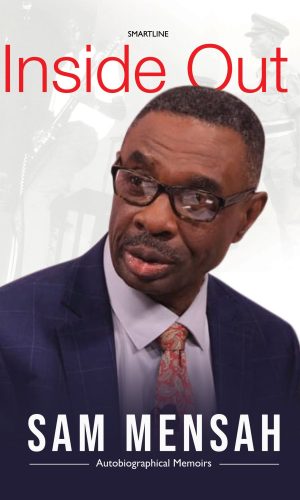
Inside Out: Autobiographical Memoirs
The author recounts a journey that starts in a small town in Ghana, through an academic and professional career in finance in Canada and the United States, culminating at the Ministry of Finance in Ghana where he served as Technical Advisor to three different Ministers of Finance from different political parties.
The memoirs depict the complexities of decision-making that combine technical know-how with political reality using several instances of policymaking and financial transactions that he led at the Ministry. For the technical reader, the author recounts a 25-year history of his involvement in many key initiatives of financial market development in Ghana.
The sweetener in Inside Out is an interesting case study of how to navigate political transitions and maintain relevance as a senior advisor to Ministers in a “winner-takes-all” political environment.
₵150.00 -
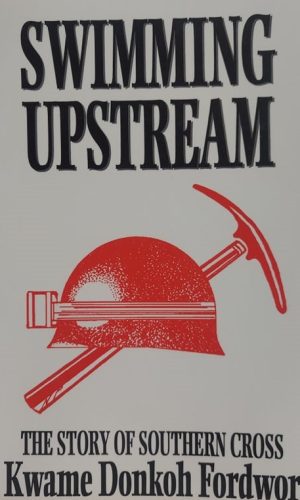
Swimming Upstream: The Story of Southern Cross
Kwame Donkoh Fordwor’s dream was realized due to the precision planning which was utilized to develop Southern Cross Mining Limited (SCML), as the company established itself as the first active gold mining operation to be brought to Ghana Since 1937. This came to pass by way of chance associations and the joint efforts of collaborators who possessed different backgrounds and motivations.
Even with the assistance of numerous people along the way, the inception of Southern Cross was not easy. It required aggressive action and time to fend or larger corporations and fight government officials for the rights and freedoms they felt they deserved.
Fordwor titles this book Swimming Upstream: The Story of Southern Cross because of the comparisons he draws between himself and the struggles of salmon attempting to reach their spawning grounds. Much like a salmon battling currents, fishermen, and other predators to reach its final destination, Fordwor had to struggle to make his own path and place in history, using keen instincts and good fortune to maintain the competitiveness and success of SCML.
Swimming Upstream vividly details the rich history of Southern Cross and other gold mining venturers who strived to achieve historical recognition. It is an illuminating work-powerfully written and inspirational to all who are still seeking to make a lifetime dream come true.₵180.00 -
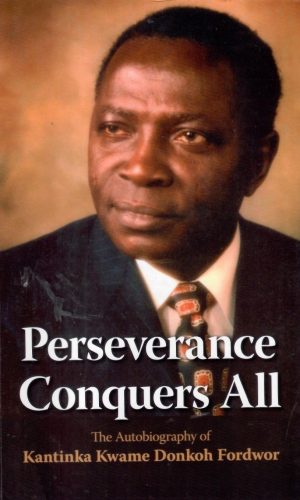
Perseverance Conquers All: The Autobiography of Kantinka Kwame Donkor Fordwor
As a very poor boy, Kantinka sustained himself in school by selling firewood. He walked four miles every day from village, Breman, to Kumasi to attend school. He recounts how by dint of hard work, he sailed through elementary and secondary school to the Graduate School of Wharton even though fate had prevented him from doing sixth form studies. He recollects how at St. Augustine’s College, Cape Coast, he was cured of a strange disease by a traditional priest. His beloved wife had to discontinue her studies to help him complete his. Kantinka thus passed through a darkness of life which continued in his working life.
His decision to provide a house for the Executive Chairman of the Capital Investments Board, in order to save the Board huge sums of money in rent payments, was so maliciously interpreted that he was editorially castigated and lambasted. His ingenious polices that eventually helped to raise the capital of the African Development Bank from US $200 million to US $100 billion was rewarded with his dismissal as the President of the Bank.
He incurred the ire of his enemies for the appreciation he received from three Kings of Asante Kingdom.
Perseverance Conquers All portrays these midnight sides of Kantinka’s life to let his sun shine brightly. His wife gave him six children any father could wish for, whom he educated as a very responsible father. Providence made him help Ghana in its financial difficulties when he became the virtual Minister of Finance during the reign of Colonel Acheampong. His input to the progress of the Catholic Church has even been more monumental as explained beautifully in the book. Kantinka is indeed the sun at midnight.
Reliance on God, patriotism, philanthropy, hard work, good family life, good parenthood, honesty, and magnanimity is what this life story portrays. This is a book that all must have and read: the student as well as the teacher; the Christian, husband and patriot.
₵90.00 -
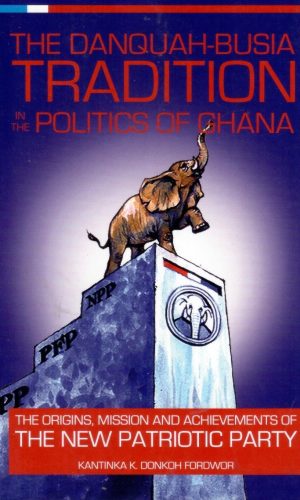
The Danquah-Busia Tradition in the Politics of Ghana: The Origins, Mission and Achievements of the New Patriotic Party
The book traces the nation’s political history from its status as a model British African Colony, the Gold Coast, to its attainment of political independence as the modern state of Ghana in 1957, under the leadership of Osagyefo Dr. Kwame Nkrumah. The author gives full recognition to the overwhelming debt that Ghana in particular and Africa in general owe to Osagyefo Dr. Kwame Nkrumah’s vision as one of the giants of Pan-African Emancipation.
The book systematically documents the contribution of Dr. Joseph Boakye Danquah and Dr. Kofi Abrefa Busia in the freedom struggle. The courageous and impressive role of Professor Adu Boahen in the breaking of the so called “culture of silence” in 1988 at the height of the PNDC regime under Flt. Lt. J. J. Rawlings is acknowledged.
In the concluding Chapter 13 all the leaders of the tradition are assessed – Dr. Joseph Boakye Danquah passes the litmus test as a doyen of Ghana politics, with impeccable democratic credentials for human rights and the rule of law. The deviation from the ideals of the Danquah-Busia Tradition by Dr. Busia during his two and half years as Head of Government is commented on. Dr. K.A. Busia challenged the rule of law in its response to the ruling of the Supreme Court in the infamous case of Sallah vs. The Republic.
Other serious deviations from the principles of the Danquah-Busia Tradition were the way in which Dr. Busia implemented the Aliens Compliance Act in 1969. Then also the throwing overboard the belief in meritocracy and the shortcomings of the “zero tolerance of corruption” by President J.A. Kuffour led administration of the Patriotic Party are discussed.
However, the important and positive achievements of the NPP Government under President Kuffour such as the successes in establishing the Ghanaian economy, upholding the rule of law, enhancing good governance, improving the education and health copulation and thus lifting the flag of Ghana high in Africa and in the international community are not ignored.
Some of the criticisms may be harsh but the author is a committed member of the Tradition and he justifies his criticism of the Kuffour government with its own commitment to “ensure that the high ideas and objectives which have guided the Tradition through good and bad times should not at any time and under any circumstance be sacrificed for narrow partisan interest or worse still for personal gain”.
The form and force of the impact of these criticisms must be left to individual assessment and experience. The author has succeeded in intellectually stimulating and provoking democrats and non-democrats of whatever affiliation to digest the contents of this book and make their own judgment. He has opened the door for a fresh appraisal of the noble ideals of the Danquah-Busia Tradition.
In the Way Forward, the author makes some reflections on the future direction of the NPP.
Politicians, opinion leaders, the media, social observers and social critics as well as students of history and political science will find this book invaluable.
₵80.00 -
Reflections on Attributes of the Holy Spirit
Joseph Akwei Allotey had invaluable experiences with the Holy Trinity from his infancy. His love for the Lord and for music spans over 35 years’ membership of five different choirs at home and abroad.
The book shares the transforming power of the Holy Trinity for human well-being and God’s ability to direct humans to great spiritual values that would benefit those who will truly be faithful and obedient to Him. He believes that any person who reads this book about the awe-inspiring and heart-warming attributes of the Holy Trinity will be extremely blessed.
₵55.00