-
A Handbook of the Constitutional Law of Ghana and its History
A Handbook of the Constitutional Law of Ghana and its History
₵600.00 -
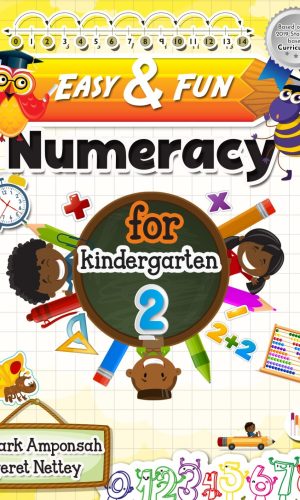
Mountype Easy and Fun Numeracy (KG2)
Easy and Fun Numeracy is a first of the Fun series expertly crafted for kindergarteners. This book is based upon and aligned to the new 2019 standard based curriculum issued by NaCCA at the Ghana Education Service.
Easy and Fun Numeracy engages kindergarteners with bright illustrations and exciting worksheets.
Your child will learn how to group, pair, compare, tell time, count, write and draw. This book also teaches kindergarteners to get adept to shapes, colours and numbers.
Easy and Fun Numeracy is a practical and fun classroom resource.
As a bonus, this book contains a certificate page. The certificate celebrates your child’s success in completing this exciting maths series.
Work out your child’s muscles with Easy and Fun Numeracy.
₵55.00 -
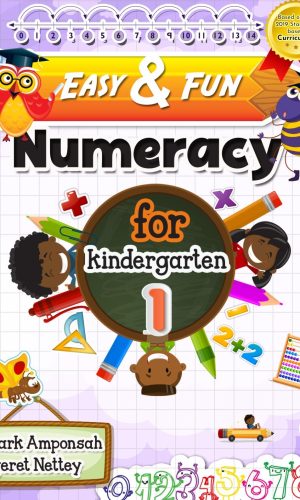
Mountype Easy and Fun Numeracy (KG1)
Easy and Fun Numeracy is a first of the Fun series expertly crafted for kindergarteners. This book is based upon and aligned to the new 2019 standard based curriculum issued by NaCCA at the Ghana Education Service.
Easy and Fun Numeracy engages kindergarteners with bright illustrations and exciting worksheets.
Your child will learn how to group, pair, compare, tell time, count, write and draw. This book also teaches kindergarteners to get adept to shapes, colours and numbers.
Easy and Fun Numeracy is a practical and fun classroom resource.
As a bonus, this book contains a certificate page. The certificate celebrates your child’s success in completing this exciting maths series.
Work out your child’s muscles with Easy and Fun Numeracy.
₵55.00 -
Raising Effective Learners: Tips for Nurturing Academic Success
Irrespective of their disposition or innate ability, every learner can develop the right skills and attitudes that can propel them to achieve high academic success. Raising Effective Learners: Tips for Nurturing Academic Success abounds with Dr. Gideon Sappor’s expertise and enthusiasm for seeing every learner achieve their possible best. This captivating book is organized into six chapters − each a gem, concerned with providing appropriate support to parents and carers who desire to support their children develop essentially authentic Self-Regulated Learning (SRL).
Each strategy is packed with practical advice on the role of the parent and carer, and what they can do to support their child. Ultimately, this readable and well-organised book combines research-based evidence and clear, practical, and concise advice on how to harness the development of SRL skills in children.
Raising Effective Learners: Tips for Nurturing Academic Success therefore serves to inspire, sensitise, and equip parents and carers with the real opportunities that foster the development of their children.₵80.00 -
Naa Luro Mini O Bihi (Dagbani)
This book tells about the life history of Naa Luro, a renowned Chief of Dagbong and his four sons who also became chiefs in succession after his death.
₵25.00 -
Sensole Kukui (Dagbani)
This little book contains short stories about the behaviour of some animals and birds.
₵12.50Sensole Kukui (Dagbani)
₵12.50 -
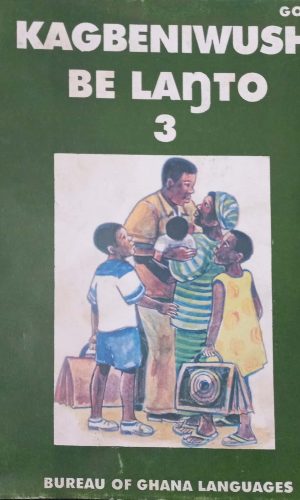
Kagbeniwushi Be Laŋto 3 (Gonja)
The Gonja language which is spoken by the Gonjas is quite distinct from all the languages in the Northern and Upper Regions. It is rather akin to some languages in the South, particularly, the Guang languages.
Gonja-speaking area covers more than one third of the Northern Region. It shares boundaries with the Brong-Ahafo and Volta Region in the South, and the Dagombas, the Mamprussis and the Walas in the North.
Gonja is a tonal language and changes in meaning are brought about by tonal differences. It is to be noted that most questions end on a falling tone.
All persons learning Gonja will find that the Gonjas have the tendency to elide vowels and slur consonants. Final vowels are always elided before other vowels, and often before words beginning with consonants.
₵15.00 -
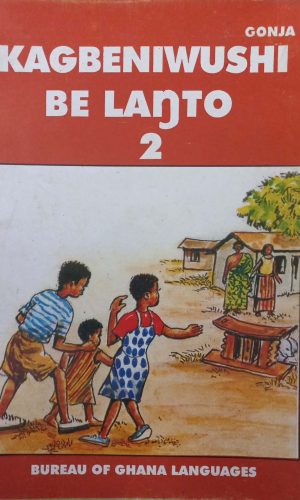
Kagbeniwushi Be Laŋto 2 (Gonja)
The Gonja language which is spoken by the Gonjas is quite distinct from all the languages in the Northern and Upper Regions. It is rather akin to some languages in the South, particularly, the Guang languages.
Gonja-speaking area covers more than one third of the Northern Region. It shares boundaries with the Brong-Ahafo and Volta Region in the South, and the Dagombas, the Mamprussis and the Walas in the North.
Gonja is a tonal language and changes in meaning are brought about by tonal differences. It is to be noted that most questions end on a falling tone.
All persons learning Gonja will find that the Gonjas have the tendency to elide vowels and slur consonants. Final vowels are always elided before other vowels, and often before words beginning with consonants.
₵18.75 -
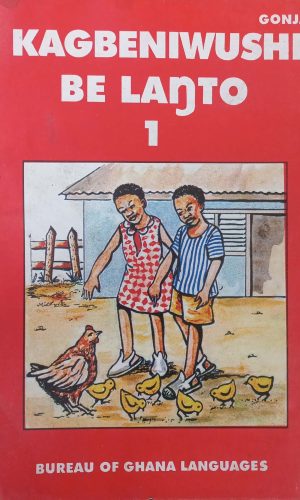
Kagbeniwushi Be Laŋto 1 (Gonja)
The Gonja language which is spoken by the Gonjas is quite distinct from all the languages in the Northern and Upper Regions. It is rather akin to some languages in the South, particularly, the Guang languages.
Gonja-speaking area covers more than one third of the Northern Region. It shares boundaries with the Brong-Ahafo and Volta Region in the South, and the Dagombas, the Mamprussis and the Walas in the North.
Gonja is a tonal language and changes in meaning are brought about by tonal differences. It is to be noted that most questions end on a falling tone.
All persons learning Gonja will find that the Gonjas have the tendency to elide vowels and slur consonants. Final vowels are always elided before other vowels, and often before words beginning with consonants.
₵15.00 -
Bookset: Let’s Speak Gonja Pack (4 books)
The Gonja language which is spoken by the Gonjas is quite distinct from all the languages in the Northern and Upper Regions. It is rather akin to some languages in the South, particularly, the Guang languages.
Gonja-speaking area covers more than one third of the Northern Region. It shares boundaries with the Brong-Ahafo and Volta Region in the South, and the Dagombas, the Mamprussis and the Walas in the North.
Gonja is a tonal language and changes in meaning are brought about by tonal differences. It is to be noted that most questions end on a falling tone.
All persons learning Gonja will find that the Gonjas have the tendency to elide vowels and slur consonants. Final vowels are always elided before other vowels, and often before words beginning with consonants.
₵60.00 -
Language Guide (Gonja Version)
The Gonja language which is spoken by the Gonjas is quite distinct from all the languages in the Northern and Upper Regions. It is rather akin to some languages in the South, particularly, the Guang languages.
Gonja-speaking area covers more than one third of the Northern Region. It shares boundaries with the Brong-Ahafo and Volta Region in the South, and the Dagombas, the Mamprussis and the Walas in the North.
Gonja is a tonal language and changes in meaning are brought about by tonal differences. It is to be noted that most questions end on a falling tone.
This booklet is intended to guide people who are not yet proficient in Gonja.
All persons learning Gonja will find that the Gonjas have the tendency to elide vowels and slur consonants. Final vowels are always elided before other vowels, and often before words beginning with consonants.
₵15.00 -
Ao M’akoma Mu (Mfantse)
Ao M’akoma Mu is an anthology of Fante poetry.
₵18.00Ao M’akoma Mu (Mfantse)
₵18.00