-
Social Structure of Ghana: A Study in Persistence and Change
When Social Structure of Ghana was first published in 1981, it became the only comprehensive and sociological attempts to examine the institutional framework of the entire Ghanaian society. It still is. In this 1999 edition, the author updates most of the data on Ghana, and analyses in greater detail some of the issues raised therein. These issues include the military in politics, religious sectarianism, social problems, educational reforms and the world of work, and the shifting loyalties of Ghanaians to kin groups, tribes and the nation.
As the twentieth century comes to a close, this book probably represents the last major publication on Ghana that analyses the country’s human and material resources for confronting the challenges of the next century.
The book will continue to be useful for studies in sociology, ethnography, political science, African studies, medical sociology value systems, nursing and social work.
₵203.00 -
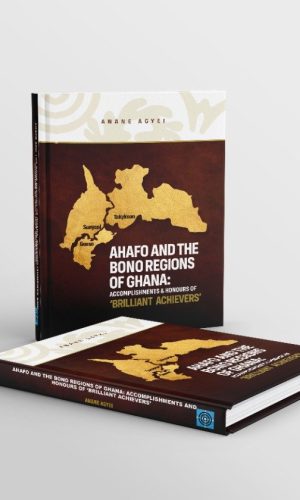
Ahafo and the Bono Regions of Ghana: Accomplishment & Honours of ‘Brilliant Achievers’ (Hardcover)
This book is a one-of-a-kind compendium of profiles of some distinguished citizens from Ahafo and the Bono Regions of Ghana. The book contains nuggets of inspiring biographical information that brings to the fore some men and women who have dared the oddities of life to challenge the debilitating issues of human existence.
The book is a guiding light for young people to emulate many successful Ghanaians, some of whom had humble beginnings but braced the odds to emerge as champions in their respective callings.
In addition, it is a must-read for professionals desiring to excel in their chosen careers and parents who want to inbue their children with a higher sense of confidence, patriotism and hope.
The first section of the book covers the profile of eminent natives of the Ahafo and the Bono regions who have contributed significantly to the development of the nation in all sectors, including chieftaincy, banking and finance, trade and industry, hospitality, diplomacy and farming, among others.
The second section talks about non-natives who had over the years also made a tremendous contribution to the regions and the nation while section three is a photographic presentation containing pictures of people such as female educationists, lawyers, ministers of state, regional ministers, sports personalities and some significant activities and events.
Additionally, the book contains photographs of all the chiefs and queen mothers of the former Brong Ahafo Region before it was carved into three regions.
It also has a six-page epilogue which contains the authors’ thoughts and also features all ministers of state who hailed from the regions.
₵250.00 -
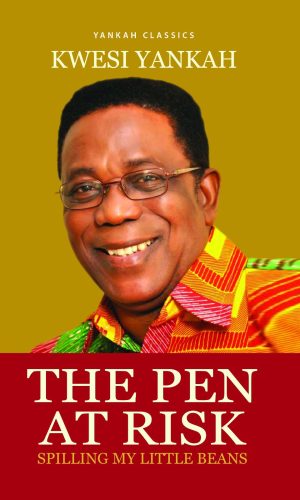
The Pen at Risk: Spilling My Little Beans
“The Pen at Risk is more than a memoir. It is a piece of authentic, ungarnished history by a writer and public intellectual who is too modest to accept the title of a historian, but who witnessed and chronicled the most intriguing epochs of Ghana’s national life. Laced with the innate Fante humour, this book is a piece of deep but entertaining non-fiction that is told with the demystified simplicity of one of Ghana’s greatest academics and writers. Kwesi Yankah is a gift to humanity, and this memoir is a greater gift to an unfortunate generation like mine that did not live in the era of the incisive writings of the great Kwatriot.” – Manasseh Azure Awuni, Editor-in-Chief, The Fourth Estate
“When a citizen who has spent his whole life scrutinising society, turns the spotlight on himself, the risks include this epic engagement that spares no one, him included. In this bare-it-all memoir, the Yankah enigma is fully bared, warts and all. As it turns out, Yankah has had more than his fair share of privileged roles, ultimately impacting the national narrative. The richness of ethnography here, is as riveting as his urban-savvy accounts of the intrigues of university and national politics. While we watch him weave his wizardry of words, we are also awed by the totality of his humanity. The Pen at Risk is a hilarious package of eruditions. It is about the exalted gossips of our Motherland. The narratives are so sweet they hurt. If this isn’t the best book you have read in years, call me illiterate.” – Kofi Akpabli, Scholar, Author, Journalist
“In this memoir, Kwesi Yankah delivers a sparkling tableau of key aspects of his life, tabling his charmed childhood and amazing trajectory as an academic. He then rolls out his long stint as an audacious social commentator and columnist for leading papers (which may have put his pen at risk). With a penmanship characterized by a keen eye for detail, this autobiography is an entertaining and captivating book that should be read by all interested in media and social history as well as autobiography as a literary genre.” – Professor Mansah Prah, University of Cape Coast
“Intriguing, revealing, and brilliant. The Pen at Risk is unvarnished introspection beautifully strung together with anecdotes in a way that is vibrant and colorful. Kwesi Yankah’s work is a refreshingly modest invitation to see life through a different lens, even for a fleeting moment.” – Dr Obeng Amoako Edmonds, University of Southern California, Los Angeles, California
₵250.00 -
The Riddle of The Oil Thief
It is the untold story of several decades of oil and gas exploitation in the Niger Delta of Nigeria. It x-rays the root causes of insecurity in Nigeria and presents the recipe for the restoration of peace in Nigeria and the entire West African Sub-region.
₵260.00The Riddle of The Oil Thief
₵260.00 -
Mindset Revolution: Master Your Thoughts and Master Your Life
Everything that has ever been created or achieved began as a thought. Living a life of destiny requires one to gain mastery over their thoughts through a process of harmonising their spirit, soul and body. This means change, which although a constant in life, can be challenging; changing a mind-set even more so.
This book is aimed at giving readers, especially Africans, a different perspective of their circumstances. It challenges the subconscious beliefs they may have which may be holding them back from living their potential. Although set within an African context, the truths presented is the minimum daily dose of inspiration and life coaching anyone needs to kick start the revolution of their minds.
Through a pragmatic, humour filled, conversational style, Akosua exposes truths, laws and secrets for living a ‘truly’ winning life. In here she shares:
Why the natural state is a life of abundance
Why having a vision and dreaming is important
How the ‘secret’ to living your potential lies in your thoughts
How to discover and become more of the REAL you
Akosua says ‘come with an open mind, embrace the truths presented and you will begin to discover how gaining mastery over your thoughts can propel you into living your wildest dreams’.₵300.00 -
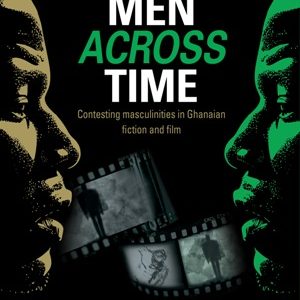
Men Across Time: Contesting Masculinities in Ghanaian Fiction and Film
Men Across Time: Contesting Masculinities in Ghanaian Fiction and Film examines the various constructions and manifestations of masculinities from precolonial, colonial, independent and post-independent Ghana as portrayed in selected Ghanaian fiction, film and music videos. Two main questions are engaged here:
- What predominant masculine images are present in Ghanaian texts?
- In what ways has the passage of time affected the subversion of dominant masculine images, contested hegemony and created room for the presence of alternative masculinities?
This book submits that in questioning the various masculine modes of behaviours portrayed in these texts, and negotiating their own masculine identities, the male characters showcase the mutations that are taking place within masculine representations over time and aver that other models of masculine expression are possible.
“This study’s engagement with the theory of hegemonic masculinity represents an important contribution to the discourse in gender studies in Ghana and Africa. In addition, it is well researched and presents a cutting-edge analysis of masculinity across genres. I cannot think of any other study in Ghanaian literary and cultural studies that provides such a broad historical background context and the book is certainly original in its approach.” — Professor Mansah Prah, Department of Sociology and Anthropology, University of Cape Coast, Ghana
“The book’s major strength is in adding significantly to an area of study that is currently under theorised. This has the potential to make a robust and important contribution to the field of knowledge on representation of masculinities in African and specifically Ghanaian popular culture.” — Associate Professor Nicky Falkof, Media Studies, University of the Witwatersrand, South Africa
₵300.00 -
Beyond the Political Spider: Critical Issues in African Humanities (African Humanities Series)
Beyond the Political Spider: Critical Issues in African Humanities by Kwesi Yankah is the first title in the newly established African Humanities Association (AHA) publication series.
By integrating his own biography into a critique of the global politics of knowledge production, Yankah, through a collection of essays, interrogates critical issues confronting the Humanities that spawn intellectual hegemonies and muffle African voices. Using the example of Ghana, he brings under scrutiny, amongst others, endemic issues of academic freedom, gender inequities, the unequal global academic order, and linguistic imperialism in language policies in governance.
In the face of these challenges, the author deftly navigates the complex terrain of indigenous knowledge and language in the context of democratic politics, demonstrating that agency can be liberatory when emphasising indigenous knowledge, especially expressed through the idiom of local languages and symbols, including Ananse, the protean spider, folk hero in Ghana and most parts of the pan-African world.
“Fascinating snapshots from an engaged scholarly life in Africa, valuable as an archival resource for the understanding of this period of higher education in Africa.” – John Higgins, Arderne Chair in Literature, Department of English Literary Studies, University of Cape Town
“This book is unique and gives a powerful rendition of the state of the Humanities in Africa (with Ghana as a case in point). It grapples with some of the pertinent issues dogging the Humanities in Africa. It comments on the Humanities scholarship in Africa, and subtly throws a challenge for future scholarship. It draws on African traditions, communal heritage, and governance in discussing the role and place of the Humanities in Africa. It also brings into the analysis the ever-changing imperatives and modernity in re-configuring African Humanities.” – Mark Benge Okot, Head of Department, Literature, Makerere University, Uganda
“Beyond the Political Spider’ effectively draws, in a unique fashion, from literature, history, linguistics and other cognate disciplines in the African Humanities.” – Sati Umaru Fwatshak, Department of History, University of Jos, Nigeria
₵340.00 -
Baffour Osei Akoto: A Royal Patriot and the Making of Ghana (Hardcover)
Foreword by President John Agyekum Kufuor
This book is primarily composed of speeches presented at the 16th edition of the annual Re-Akoto Memorial Lectures held at the Kwame Nkrumah University of Science and Technology in Kumasi. The Re Akoto Memorial Lectures, instituted by His Majesty Otumfuo Osei Tutu II, life patron of the Students’ Representative Council (SRC) of the Ghana School of Law, seeks, amongst other things, to promote research, study and educate the citizenry on the development of Ghana’s constitutional democracy and human rights. Over the years, it has been presented by a good number of eminent Ghanaians and through which they have illuminated various spheres of life, especially issues regarding law and fundamental human rights, which are the key components that form the genesis of the famous Re-Akoto Case.
The presenters included Kwame Pianim, one of Ghana’s eminent economists; Maxwell Opoku-Agyemang, then-acting Director of the Ghana School of Law; Chief Justice Kwasi Anim Yeboah and Attorney-General Godfred Dame. Prof Mike Aaron Oquaye, a veritable political scientist and accomplished politician, knitted the strains together to discuss how Baffour’s strides and successes reaffirmed the liberal democratic political philosophy of the New Patriotic Party (NPP). He indicated that human beings have a dignity that must be protected and that dictatorial tendencies must not be accepted. Finally, provided a historical trajectory of Ghana’s stint with an authoritarian regime focusing on the country’s post-independence one-party political system.
“Baffour excelled in this career as an Asante diplomat, a valuable repository of Asante and Ghanaian social, cultural and political history, and a defender of the power of traditional leadership in the face of the onslaught of modern post-colonial politics in Ghana.” – His Majesty Otumfuo Osei Tutu II, Asantehene
₵350.00 -
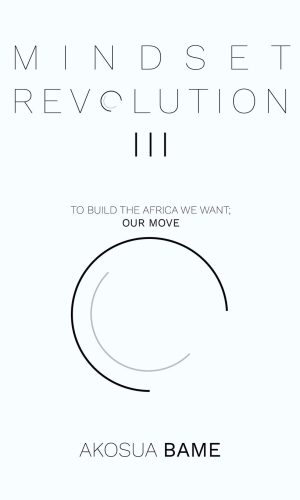
Mindset Revolution III: To Build the Africa We Want; Our Move
*Lead time for delivery – 4 weeks
This is the handbook to the most important key to unlocking Africa’s power? Mindset.
Akosua Bame continues her popular Mindset Revolution series with this latest book, noting that everything that has ever been created began as a thought and thoughts are driven by mindsets. Without the right mindsets, Africa will remain caught up in this ever-vicious cycle of poverty and dependence on aid. In this book, the author seeks to empower her audience to play their part in resetting and rebuilding Africa, by sharing strategies for developing and embedding the seven mindsets that are necessary to realising the continent’s potential.
Here she discusses a visionary mindset, an evolutionary mindset, a legacy mindset, a knowledge-seeking mindset, a wealth-creation mindset, an entrepreneurial mindset and a health mindset. Akosua declares that Africa has been a cocoon for far too long; it is time for the butterfly to emerge. For that to happen, the people of Africa must turn inward, change the way they think, and then take steps to transform the continent. It is time for a paradigm shift. It is time for Africa to stop apologetically seeking a voice on the global stage. It is time for Africa to stop seeking solutions to its socio-economic problems by looking externally.
It is time for Africa to realise that the power and indeed the only way to transform comes from within. To build the Africa we want, to transform the continent, all it takes is this?
MINDSET REVOLUTION.
₵377.00 -
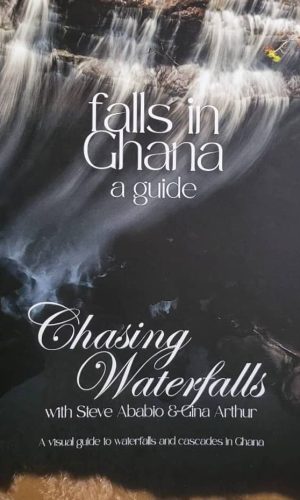
Falls in Ghana: Unified Guide Book (Chasing Waterfalls with Steve Ababio & Gina Arthur)
This is a guide based on our experience – designed to help you get out and go have your waterfall adventure. This book details our experiences on and off the road, encounters, processes, ease of access and what sight awaits you.
This guide will help reduce the unknown variables and provide some structure in terms of what to expect and what approaches to take on your journey as you interact with different communities.
The stories and experiences shares should also help boost your confidence and encourage you to make a plan and embark on a waterfall chase of your own!
₵400.00 -
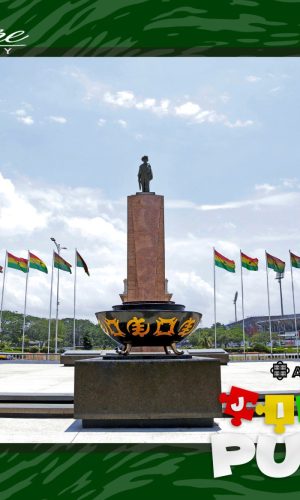
Abusua Pa Jigsaw Puzzle: The Black Star Square (216 Puzzle Pieces) – Pre-Order
Independence Square, also known as Black Star Square, is a landmark in Accra, Ghana, with historical and cultural significance. It serves as the venue for Ghana’s Independence Day celebrations and features symbolic elements like the Independence Arch and the Independence Square Monument. The square is one of the world’s largest and can accommodate large gatherings. It has surrounding landmarks and is open to the public for recreational activities. Independence Square holds historical significance as the site where Ghana proclaimed its independence from British colonial rule in 1957. It stands as a symbol of national pride and hosts events that commemorate Ghana’s freedom.
The soldier facing the Independence Arch in Ghana symbolizes the country’s struggle for independence and its emergence as the first sub-Saharan African nation to gain freedom from British colonial rule. The soldier represents the Ghanaian military’s dedication to protecting the nation’s sovereignty and symbolizes the courage and sacrifice of the people in their fight for self-rule. It serves as a reminder of Ghana’s commitment to preserve its independence, uphold values of freedom and democracy, and promote national unity. Overall, the soldier facing the Independence Arch represents the historical significance of Ghana’s independence, the contributions of the military, and the ongoing commitment to safeguard the nation’s sovereignty.
₵450.00 -
Abusua Pa Jigsaw Puzzle: Chief Dancing (140/216 Puzzle Pieces) – Pre-Order
A Chief’s Dance in Ghana holds great cultural significance as a symbol of the chief’s authority, heritage and community unity. It preserves Ghanaian traditions and passes down ancestral knowledge. The dance has ritual and spiritual elements and honours ancestors and historical lineage.
It showcases cultural identity and attracts tourists, promoting cultural pride and understanding. The Chief’s Dance plays a vital role in Ghanaian society, connecting the past with the present and ensuring the continuity of cultural heritage.
₵450.00