-
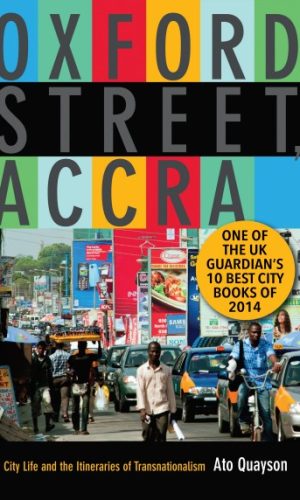
Oxford Street, Accra: City Life and the Itineraries of Transnationalism
In Oxford Street, Accra, Ato Quayson analyzes the dynamics of Ghana’s capital city through a focus on Oxford Street, part of Accra’s most vibrant and globalized commercial district. He traces the city’s evolution from its settlement in the mid-seventeenth century to the present day. He combines his impressions of the sights, sounds, interactions, and distribution of space with broader dynamics, including the histories of colonial and postcolonial town planning and the marks of transnationalism evident in Accra’s salsa scene, gym culture, and commercial billboards.
Quayson finds that the various planning systems that have shaped the city—and had their stratifying effects intensified by the IMF-mandated structural adjustment programs of the late 1980s—prepared the way for the early-1990s transformation of a largely residential neighborhood into a kinetic shopping district. With an intense commercialism overlying, or coexisting with, stark economic inequalities, Oxford Street is a microcosm of historical and urban processes that have made Accra the variegated and contradictory metropolis that it is today.
“Oxford Street, Accra offers a fresh portrait of a rising African metropolis by one of the most original and skilled critics of the African condition. Deeply researched and packed with detail and bold in scope and analysis, Oxford Street, Accra is a unique addition to the growing body of work on contemporary African Urbanism. This extraordinary book shows the extent to which the future of urban theory might well lie in the global South.” – Achille Mbembe, author of Critique de la raison négre.
KEY SELLING POINTS:
- Oxford Street, Accra is a must-buy as an invaluable companion and compass for both newcomers and returning visitors to Accra.
- Oxford Street, Accra was chosen as one of the ‘UK Guardian’s 10 Best City Books of the World in 2014.’
- Oxford Street, Accra was also the Co-Winner of ‘The Urban History Association’s Top Award in the International Category For Books Published About World Cities in 2013 – 2014.’
- Oxford Street, Accra contains an encyclopedic knowledge of the City of Accra, tracing the city’s evolution from its settlement in the mid-seventeenth century to the present day.
- The book offers a microcosm of historical and urban knowledge of the making of the city that have transformed Accra into the sophisticated metropolis that is it today.
₵160.00 -
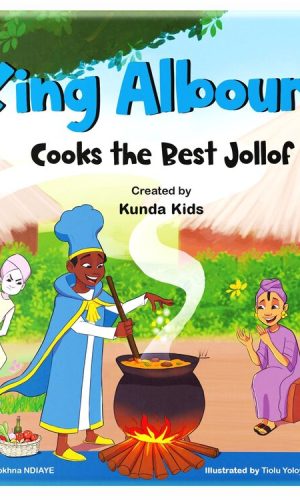
King Alboury Cooks the Best Jollof (Africa’s Little Kings & Queens)
Age Range: 3 – 8 years
A must-have for every child’s library. Loved by children around the world and teaches them the importance of kindness and community.
King Alboury Cooks the Best Jollof is a fictional story inspired by King Alboury Ndiaye, the last King of the Jollof Kingdom in Senegal. A must-have for every child’s library.
In this story, King Alboury loves to cook and his favourite meal to make is his famous jollof rice. His ancestors invented the recipe, and so he is the only one who knows the secret. However, King Alboury has a problem, his troublesome neighbours, the Chuchus people. Every time the King cooks his special Jollof rice, their tummies start to rumble so loud that they become jealous. Rumour has it that they are plotting against the Jollof Kingdom, but don’t worry, King Alboury has a plan!
₵55.00 -
Beyond the Political Spider: Critical Issues in African Humanities (African Humanities Series)
Beyond the Political Spider: Critical Issues in African Humanities by Kwesi Yankah is the first title in the newly established African Humanities Association (AHA) publication series.
By integrating his own biography into a critique of the global politics of knowledge production, Yankah, through a collection of essays, interrogates critical issues confronting the Humanities that spawn intellectual hegemonies and muffle African voices. Using the example of Ghana, he brings under scrutiny, amongst others, endemic issues of academic freedom, gender inequities, the unequal global academic order, and linguistic imperialism in language policies in governance.
In the face of these challenges, the author deftly navigates the complex terrain of indigenous knowledge and language in the context of democratic politics, demonstrating that agency can be liberatory when emphasising indigenous knowledge, especially expressed through the idiom of local languages and symbols, including Ananse, the protean spider, folk hero in Ghana and most parts of the pan-African world.
“Fascinating snapshots from an engaged scholarly life in Africa, valuable as an archival resource for the understanding of this period of higher education in Africa.” – John Higgins, Arderne Chair in Literature, Department of English Literary Studies, University of Cape Town
“This book is unique and gives a powerful rendition of the state of the Humanities in Africa (with Ghana as a case in point). It grapples with some of the pertinent issues dogging the Humanities in Africa. It comments on the Humanities scholarship in Africa, and subtly throws a challenge for future scholarship. It draws on African traditions, communal heritage, and governance in discussing the role and place of the Humanities in Africa. It also brings into the analysis the ever-changing imperatives and modernity in re-configuring African Humanities.” – Mark Benge Okot, Head of Department, Literature, Makerere University, Uganda
“Beyond the Political Spider’ effectively draws, in a unique fashion, from literature, history, linguistics and other cognate disciplines in the African Humanities.” – Sati Umaru Fwatshak, Department of History, University of Jos, Nigeria
₵340.00 -
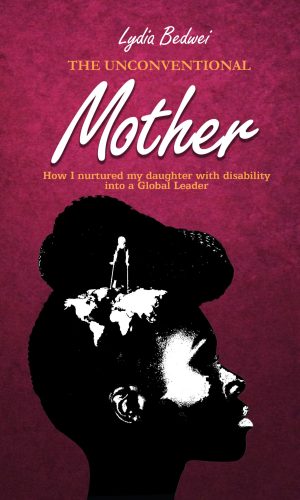
The Unconventional Mother: How I Nurtured My Daughter with Disability into a Global Leader
If you think you have seen it all, this is the book that makes you stop. No, you haven’t. The extent that a super hero of a mother goes to keep her daughter alive and functional would fire you up and revise your notes about this thing called life.
Struck at birth by an unexpected combination of strange conditions, the life of a young girl was hanging in the balance from day one. The reader cannot help but be thrilled by how a mother – in the name of God – went to battle with and against science, eventually gifting to us a world-class professional.
Sometimes a medical journal, sometimes a family drama, sometimes a life-and-death page-turner, the episodes in this book involve diverse experts, hospitals across several countries, unusual insights on health as well as a redeeming grace of the highest order. This roller coaster lifesaving journey fortifies your resolve in your own particular struggle. When you finish The Unconventional Mother, the phrase ‘it is possible’ will taste different in your mouth.
₵110.00 -
Bookset: Not My Time to Die & Guns Over Kigali (2 books)
A pack of 2 books on the Kigali Genocide
About the Books
Not My Time to Die
“Reading Yolande Mukagasana’s book in French at the age of 15 changed my life.”- Gaël Faye
Originally published as La mort ne veut pas de moi in 1997, this book was the first survivor testimony to be published about the 1994 genocide against the Tutsi in Rwanda.
In 1994 Yolande was an unconventional nurse and mother of three who enjoyed wearing jeans and designer glasses. She ran her own clinic in Nyamirambo and was planning a party for her wedding anniversary. But when genocide started everything changed. Targeted because she was a successful Tutsi woman, she was separated from her family and had to flee for her life.
Mukagasana’s gripping memoir describes the betrayal of friends and help that came from surprising places. Quick-witted and courageous, Yolande never lost hope she would find her children alive.
Translated from the French by Zoe Norridge.
Guns Over Kigali
The world has come to know about the carnage and human suffering in Rwanda through the reportage by newsmen. Guns Over Kigali is no such reportage. It is personal account of a UN peacekeeping soldier who was in the thick of the action to bring sanity into a country that had gone berserk.
Major General Anyidoho, the author of this book, survived the mayhem and the hectic moments in Rwanda and tells the world the true story of the events as he saw them. What is valuable in his account are the lessons he draws which have profound implications for UN peacekeeping around the world. Students in military institutions, researchers in war studies, politicians, policy makers, relief NGOs and the general reader interested in international relations will find this book a compelling and very useful reading.
In Rwanda the author was the Deputy Force Commander and Chief of Staff of the UN Assistance Mission for Rwanda (UNAMIR) where he collected the material for this book.
₵155.00₵165.00Bookset: Not My Time to Die & Guns Over Kigali (2 books)
₵155.00₵165.00 -
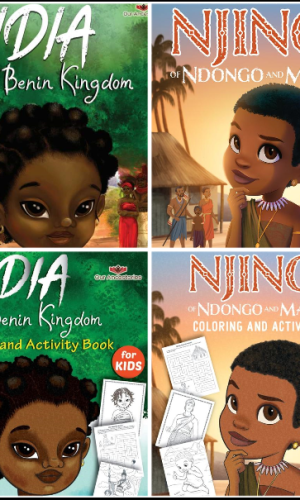
Our Ancestories Bookset: Idia of the Benin Kingdom, Njinga of Ndongo and Matamba Plus Coloring & Activity Books (4 books)
Age Range: 4 – 12 years
- Children’s Africana Book Awards (CABA) – 2021 Winner – Best Books for Young Children
- Wishing Shelf Book Award – 2020 Finalist
- Kidsshelf Book Cover Award -2020 Winner
- Eric Hoffer Award – Honourable Mention (Children’s Category) First Horizon Finalist Grand Prize Short List
The complete set of the Our Ancestories books. Our picture books as well as accompanying workbooks on Queen Idia and Njinga. These are stories of hope and courage that show every young girl is capable of greatness.
There is a deep divide between the truth of African history and the common understanding of it. Our Ancestories Bookset helps to bridge this gap through various means including stories about two African female leaders and accompanying activity and colouring books.
This set includes:
Idia of the Benin Kingdom (Our Ancestories)
Njinga of Ndongo and Matamba (Our Ancestories)
Idia of the Benin Kingdom: Coloring and Activity Book (Our Ancestories)
Njinga of Ndongo and Matamba: Coloring and Activity Book (Our Ancestories)
Our Ancestories’ vision is to nudge the world towards a point where:
- There is an avid learning culture for African history.
- People of African descent are at least as exposed to African history as we are to Western history.
- Africans look more to our history as we pave a way for the future.
- Legends that make up African history are mainstream and are introduced to children across the globe.
₵155.00 -
Queen Kitami Makes Friends (Africa’s Little Kings & Queens)
Age Range: 3 – 8 years
Meet Queen Kitami, the playful leader of Mpororo. She’s faced with having to make new friends, which hasn’t been easy, but she has a plan!
Queen Kitami Makes Friends is a rhyming story introducing you to a playful and courageous friend.
This is a fictional story based on a real-life warrior Queen Kitami-kya-Nyawera, leader of the Mpororo Kingdom, now part of modern-day Uganda, East Africa. A special series perfect for introducing the next generation of young leaders, thinkers and game-changers to Africa’s great history.
₵55.00 -
Not My Time to Die
“Reading Yolande Mukagasana’s book in French at the age of 15 changed my life.”- Gaël Faye
Originally published as La mort ne veut pas de moi in 1997, this book was the first survivor testimony to be published about the 1994 genocide against the Tutsi in Rwanda.
In 1994 Yolande was an unconventional nurse and mother of three who enjoyed wearing jeans and designer glasses. She ran her own clinic in Nyamirambo and was planning a party for her wedding anniversary. But when genocide started everything changed. Targeted because she was a successful Tutsi woman, she was separated from her family and had to flee for her life.
Mukagasana’s gripping memoir describes the betrayal of friends and help that came from surprising places. Quick-witted and courageous, Yolande never lost hope she would find her children alive.
Translated from the French by Zoe Norridge.
₵100.00Not My Time to Die
₵100.00 -
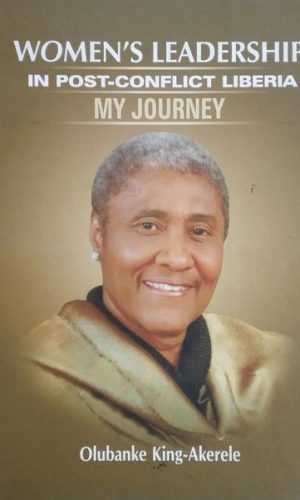
Women’s Leadership in Post-Conflict Liberia: My Journey (Hardcover)
The realities of trying to institutionalize reform in Liberia after 14 years of civil war comes alive in this book, particularly given the capacity constraints the author had to work with – what she describes as the “no money syndrome” coupled with the human and institutional capacity challenges she faced after a prolonged absence of almost 25 years working and living in the Diaspora.
This book is a must-read for all women (and men) who need guidance and mentoring on the challenges, consequences and sacrifices required to stand up for one’s convictions.
₵60.00 -
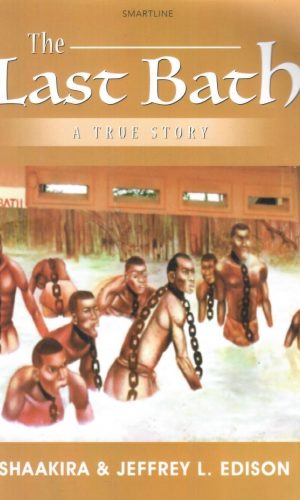
The Last Bath: A True Story
Age Range: 8 years and above
The Last bath is a true story of slavery and emancipation based on the sequential murals painted by the Ghanaian artist Obeh. Obeh completed a series of murals in 2016, that illustrate real-life experiences had by some Guamanians who were captured and enslaved. The Donkor Nsuo (Slave River) is in the ancestral river park located in Assin Manso, a town in the Central Region of Ghana.
Obeh is an artist from Assin Manso, Ghana. He was chosen to paint this series of murals to tell the history of enslavement to emancipation, as it occurred in Ghana. Completed in 2016, his portrayals depict some of the unforgettable horrors of the slave trade.
₵25.00The Last Bath: A True Story
₵25.00 -
Heritage Pack: Ghana Our Motherland (6 books)
Age Range: 8 years and above
A set of five books for young ones and anyone looking for a quick and easy appreciation about the country Ghana: its history, culture, traditional systems, languages, people, food and more!
These books provides basic education about Ghanaian history, cultural practices and heritage for the Ghanaian child. Though they will prove useful for every Ghanaian (as well as non-Ghanaians), they are especially beneficial for parents who are keen on educating the Ghanaian child in the diaspora.
These books give a foundation of Ghanaian history and cultural practices to enable readers understand and appreciate Ghanaian heritage.
There is a bonus book that talks about Africa!
₵230.00₵244.00Heritage Pack: Ghana Our Motherland (6 books)
₵230.00₵244.00 -
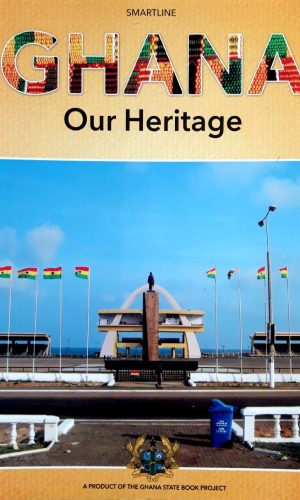
Ghana Our Heritage
Age Range: 8 years and above
A comprehensive book that introduces both young and old to Ghana, its history, culture, traditional systems, languages, people, food and more!
This book provides basic education about Ghanaian history, cultural practices and heritage for the Ghanaian child. Though it is useful for every Ghanaian (as well as non-Ghanaians), it was specifically designed to educate the Ghanaian child in the diaspora.
The book gives a foundation of Ghanaian history and cultural practices to enable readers understand and appreciate Ghanaian heritage.
₵48.00Ghana Our Heritage
₵48.00