-
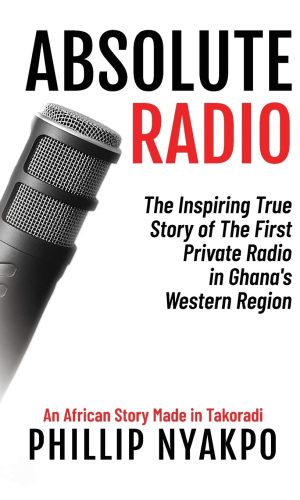
Absolute Radio: The Inspiring Story of the First Private Radio in Ghana’s Western Region
*Available from 6 September 2022
From the heart of Africa, a spellbinding true story of entrepreneurship, media, culture and tradition, all tastefully rolled into one! Absolute Radio is an authentic story of girls and boys who became women and men – and heroes – on the wings of a radio station. Running the course of 25 years, the story comes from the culturally stylish twin city of Sekondi-Takoradi in Ghana, with global footprints.
It is the most tantalising and ground-breaking body of work about Ghana’s private broadcasting industry. The author, former journalist Phillip Nyakpo, is himself an eye-witness and a participant in these true events.
From his base in Perth, Australia, Phillip interviewed women and men across four continents who made it happen over a quarter of a century.
The result is that he opened up to the world, a character and spirit of Africa that is all too often missing.
In telling the story, he writes a compelling narrative that is delicate, witty, eye-opening and wonderfully inspiring.
₵250.00 -
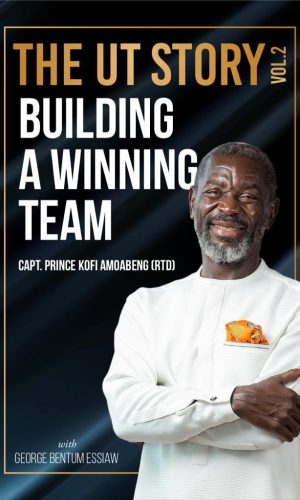
The UT Story: Building A Winning Team – Volume 2 (Hardcover)
*Available from 23rd February
In this second instalment of Capt. Prince Kofi Amoabeng’s (Rtd) memoirs, he discusses in painstaking detail, how he led his team to consolidate the gains made in the early days. He also dwells on how he established a unique corporate culture mainly through leading by example, and how essential that corporate culture was to the sustenance and growth of the business.PK, as he was affectionately called by his team, lays bare UT’s ambitious expansion drive which culminated in establishing branches in nearly all the regions of Ghana as well as the founding of subsidiaries in Nigeria, South Africa, and Germany.
If the first instalment of the UT Story was delightful and inspiring, this second instalment is insightful, touching and thought-provoking. And as always, it is an in-depth, no-holds-barred, unabashed account driven by the enigmatic figure of Capt. Prince Kofi Amoabeng (Rtd).
Written with George Bentum Essiaw, an award-winning writer, author and filmmaker.
₵250.00 -
The Pen at Risk: Spilling My Little Beans
“The Pen at Risk is more than a memoir. It is a piece of authentic, ungarnished history by a writer and public intellectual who is too modest to accept the title of a historian, but who witnessed and chronicled the most intriguing epochs of Ghana’s national life. Laced with the innate Fante humour, this book is a piece of deep but entertaining non-fiction that is told with the demystified simplicity of one of Ghana’s greatest academics and writers. Kwesi Yankah is a gift to humanity, and this memoir is a greater gift to an unfortunate generation like mine that did not live in the era of the incisive writings of the great Kwatriot.” – Manasseh Azure Awuni, Editor-in-Chief, The Fourth Estate
“When a citizen who has spent his whole life scrutinising society, turns the spotlight on himself, the risks include this epic engagement that spares no one, him included. In this bare-it-all memoir, the Yankah enigma is fully bared, warts and all. As it turns out, Yankah has had more than his fair share of privileged roles, ultimately impacting the national narrative. The richness of ethnography here, is as riveting as his urban-savvy accounts of the intrigues of university and national politics. While we watch him weave his wizardry of words, we are also awed by the totality of his humanity. The Pen at Risk is a hilarious package of eruditions. It is about the exalted gossips of our Motherland. The narratives are so sweet they hurt. If this isn’t the best book you have read in years, call me illiterate.” – Kofi Akpabli, Scholar, Author, Journalist
“In this memoir, Kwesi Yankah delivers a sparkling tableau of key aspects of his life, tabling his charmed childhood and amazing trajectory as an academic. He then rolls out his long stint as an audacious social commentator and columnist for leading papers (which may have put his pen at risk). With a penmanship characterized by a keen eye for detail, this autobiography is an entertaining and captivating book that should be read by all interested in media and social history as well as autobiography as a literary genre.” – Professor Mansah Prah, University of Cape Coast
“Intriguing, revealing, and brilliant. The Pen at Risk is unvarnished introspection beautifully strung together with anecdotes in a way that is vibrant and colorful. Kwesi Yankah’s work is a refreshingly modest invitation to see life through a different lens, even for a fleeting moment.” – Dr Obeng Amoako Edmonds, University of Southern California, Los Angeles, California
₵250.00 -

Class Struggle In Africa
Recent African history has exposed the close links between the interests of imperialism and neo-colonialism and the African bourgeoisie. This book reveals the nature and extent of the class struggle in Africa, and sets it in the broad context of the African Revolution and the world socialist revolution.
₵270.00Class Struggle In Africa
₵270.00 -

Some Essential Features of Nkrumaism
This new and expanded edition is a valuable guide to the political thought of Nkrumah.
Part one, by the editors of The Spark (Accra), deals with Nkrumah’s policies to 1964.
Part Two, by the editors of Panaf Books, concerns the period after 1964.
Of particular significance in the new Part Two is a survey of the very important books written by Nkrumah during the Conakry period between March 1966 and August 1971.
The themes include: forms of the independence struggle; colonialism, imperialism and neocolonialism; economic development; the role of the vanguard party; class struggle; and the unification of Africa.
₵270.00 -
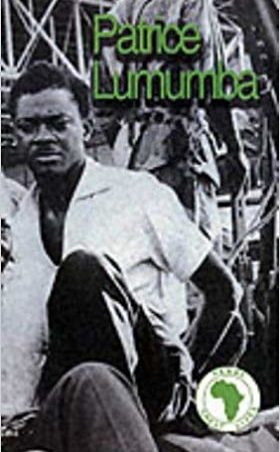
Patrice Lumumba (Panaf Great Lives)
This book considers the first years of the Congo Republic following independence in 1960. Particular analysis is made of Lumumba’s policies and of western pressures in this crucial experience of the African Revolution.
The story of Lumumba underlines the correctness of Nkrumah’s Pan-African thesis.
₵270.00 -

Frantz Fanon (Panaf Great Lives)
Required reading for all interested in the Algerian Revolution, and in Fanon’s brief but highly productive contribution. A close study is made of the relationship between Fanon’s ideological development and the content and impact of his political philosophy.
₵270.00Frantz Fanon (Panaf Great Lives)
₵270.00 -
I am the Street Lawyer (Hardcover)
In this book, the author chronicles his perilous journey to becoming a household name in legal practice in Ghana, by sharing stories from the Victims’ perspectives.
His simple practice of the law demystified the revered and mysterious legal profession.
He became so common and accessible to the poor and most vulnerable victims of varied violations of our dysfunctional system, much to the annoyance of the true owners of the law profession; the Law Lords.
Moved by compassion, he led and represented several victims of rape, defilement, Military brutality, Police abuse and extrajudicial killings, religious and political abuses to navigate and find justice in a corrupt, unjust and dysfunctional justice system.
Discover how a street child became a street lawyer at the risk of losing his own legal career as beneficiaries of the corrupt system fight back.
₵295.00 -
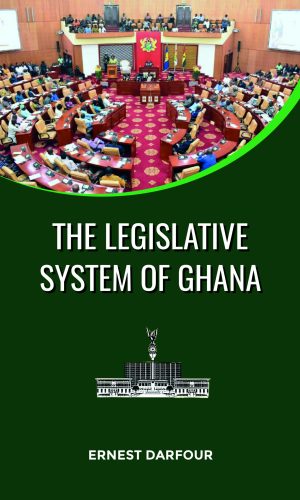
The Legislative System of Ghana
This book focuses on the legislative system of Ghana. It contains sixteen chapters, each focusing on a unique aspect of the legislative system of Ghana. It outlines the rules, the practice, and procedure that govern the conduct of business and Members in the Parliament of Ghana and its committees, and the various actors involved in the organisation of the legislative business. It breaks into minute forms, the procedural norms, and attitudes that influence members’ behaviour and the various parliamentary outcomes.
“This study is well researched and presented in a very lucid form…. Indeed, it is a very useful source for students, parliamentarians, and academics on the parliamentary history, procedure, and practice of Ghana’s Parliament.” – Hon Dr. Benjamin Kunbour, Former Majority Leader, Former Minister of Defence and Senior Lecturer, University of Ghana School of Law
₵300.00The Legislative System of Ghana
₵300.00 -

Nana Otuo Siriboe II, 1971-2021: Fifty Years of Distinguished Service to Juaben, Asanteman and Ghana
Foreword by President Nana Akufo-Addo
Nana Otuo Siriboe II was enstooled as Juabenhene – Paramount Chief of the Juaben Traditional Area of Asante − on August 31 1971, at the age of 26. An electrical engineer by training, he decided to leave the employ of the Electricity Corporation of Ghana and make the development of his State a priority.
Fifty years on, from the days of Dr. K.A. Busia, Acheampong, Akuffo, Rawlings, Limann, Rawlings, Kufuor, Mills, Mahama to Akufo-Addo in 2021, he has transformed Juaben into a modern town. He uses every opportunity that he has to advance the cause of Juaben. Every development agency that has ever dealt with Nana Otuo Siriboe has been persuaded to leave a mark in Juaben. Under his supervision and guidance, Juaben has benefitted from electricity, potable water, a market, hospital, police station, some bungalows for the police, a circuit court, an asphalted road network, street lighting and other modern amenities.
He has also changed the economic circumstances of his people by not only establishing a rural bank, but also making farming attractive through his own oil palm farming activities and his setting up of Juaben Oil Mills, the largest indigenously-owned palm oil processing facility in Ghana, with over 400 employees. An interesting feature of the processing plant is the conversion of its waste materials into electricity to power the factory’s plant and equipment, the Juaben Hospital and the town’s water pumping station.
In spite of this unparalleled service to his people, Nana Otuo Siriboe has stretched his influence way beyond Juaben. A trusted lieutenant of both Otumfuo Opoku Ware II of blessed memory and the reigning Asantehene, Otumfuo Osei Tutu II, today Nana Otuo Siriboe II is a well-known and respected statesman across Ghana. He has had the privilege of serving in many sectors of public life in Ghana. In 1979, he was a Member of the Constituent Assembly that drafted the 1979 Constitution. Nana Otuo Siriboe II has also served on several Boards and Councils such as the Boards of the Lands’ Commission, GBC, The Trade Fair Authority and The Komfo Anokye Hospital and on the KNUST University and the Prisons Service Councils.
In 1992, he was thrust further into the limelight when, as a nominee of the Ashanti Regional House of Chiefs, he became a Member of the Consultative Assembly, serving as the Chairman of the Business Committee, that spearheaded the drafting of the 1992 Constitution. He was a Member of the Council of State between 2001 until 2008 under President J.A. Kufuor. In 2017, he was appointed a Member of the Council of State by President Nana Addo Dankwa Akufo-Addo and was unanimously elected as Chairman of the Council of State becoming the first traditional ruler in Ghana’s history to occupy that august position. Reappointed to the Council of State in 2021 and re-elected as Chairman, he has also become the first Ghanaian in history to be a two-term chairperson of the Council of State.
This 308-page Golden Jubilee coffee table book chronicles the major milestones of Nana Otuo Siriboe II’s reign through captivating photographs, interesting newspaper clippings, and thought-provoking newspaper editorials; and has travelled through a 25-year journey to get to this point.
The History of Juaben was authored by Emeritus Professor Albert Adu Boahen of blessed memory and the Juabenhene’s biography and key achievements by Professor Robert Addo-Fening for the 25th and 40th anniversary brochures respectively. Abyna-Ansaa Adjei, on her part, documents Nana Otuo Siriboe II’s activities of the past 10 years, his views on his 50-year reign as well as the views of some Juaben citizens.
A simple read, it comes highly recommended with a goodwill message from the Asantehene, Otumfuo Osei Tutu II and a foreword by President Nana Akufo-Addo, which states at its conclusion: “I recommend, most enthusiastically, this beautiful book that chronicles these events.”
₵300.00 -
Introduction to the Law of Torts in Ghana (Hardcover)
This book attempts to state the Law of Torts as it should apply in the Ghana legal stem. Article I I of the 1992 Constitution recognises the common law principles as they were received from the Anglo-American common law tradition as part of the Laws of Ghana. Section 54 of the Courts Act, 1993 (Act 459) provides that our courts may in the determination of any issue arising from the common law, adopt, develop and apply remedies from any other legal system based on the Anglo-American legal tradition.
In many contemporary common law countries, for example the UK and the USA, however, there has been an explosion of statutory interventions in the common law. This is reflected in the discussions of the common law principles in the recent editions of textbooks written in those countries. Unfortunately, these statutes are not “statutes of general application,” as this phrase is used and understood in the Ghana legal system. The admixture of these statutes and the common law in these countries makes the isolation of the parts of those books, which are helpful to our causes in Ghana, a major challenge.
This book attempts to isolate what is usable from what is not. The hope of the author and the publishers is that the reader, whether a practitioner or student, will find the principles of torts law, as stated in the book, devoid of the statutory contaminations.
₵300.00 -
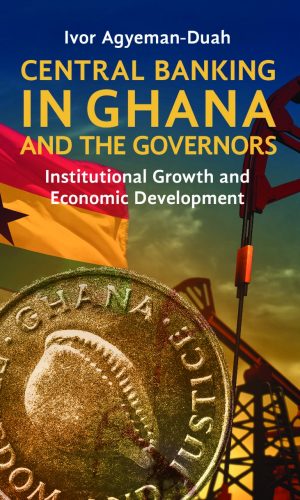
Central Banking in Ghana and the Governors: Institutional Growth and Economic Development (Hardcover)
A charge of chariots of fire, this is not just a book about the financial history of Ghana in spite of its formative challenges but a centenary work of West Africa – regional monetary evolution and global multilateralism. For devout bankers, intelligentsia, historians and aspirants, this is the one. Elegantly written, it establishes Agyeman-Duah as an unavoidable historian of the Bank of Ghana. — Jewel Howard-Taylor, Vice-President of the Republic of Liberia
The Bank of Ghana is technically a better institution than it was thirty years ago. Even governments are less inclined towards interventions in its work. It is different from other captured public institutions where economic decision-making is with a political lens. — Prof. Ernest Aryeetey, Former Vice-Chancellor of the University of Ghana and Co-editor of The Economy of Ghana-Analytical Perspectives on Stability, Growth and Poverty
The Bank of Ghana is leading central banks in the sub-region with regards to the use of technology in the finance service industry … countries in Africa are now learning from Ghana’s digital payment regulations. — Mohammed Sanusi Lamido, Former Governor, Central Bank of Nigeria and the 14th Emir of Kano
Ghana has in recent years been one of Africa’s more successful economies – from its colonial journey through Heavily Indebted Poor Country (HIPC) to stable modern democracy. Agyeman-Duah has a sound appreciation of the difficulties of transforming a producer of commodities of raw materials into a prosperous mixed economy. Now an oil economy, the test ahead is, will Ghana at last be able to control its own economic destiny; free of obligations to donors and the storms from world commodity markets? — Frances Cairncross, Rector Emeritus, Exeter College, University of Oxford and Former Managing Editor, The Economist
₵300.00