-
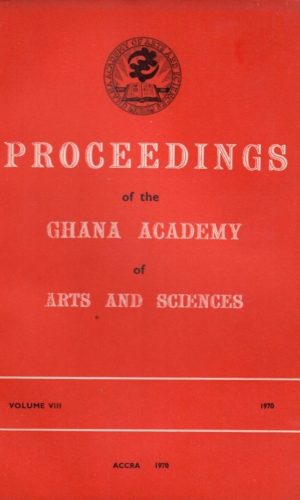
Proceedings of the Ghana Academy of Arts and Sciences & The J.B. Danquah Memorial Lecture, Series 3 (Volume VIII, 1970)
Proceedings, 1970. This issue contains the third series of the J.B. Danquah Memorial Lectures delivered by R.K.A. Gardiner in 1970.
Contents
The Role of Educated Persons in Ghana Society – R.K.A. Gardiner (The J.B. Danquah Memorial Lecture, Series 3)
Law Reform in Ghana in the 1970s – Justice N.A. Ollennu
Africa and the European Economic Community – Professor J.C. de Graft-Johnson
The Dilemma of the Scientist – Professor D.A. Bekoe
The Intellectual and the Meeting of Disciplines – Dr. Letitia E. Obeng
The Creative Arts and the Community – Professor J.H. Nketia
Faith and Reason – Professor K.A. Dickson
Some Concepts of Medical Education in Ghana – Professor C.O. Easmon
Training and Employment of Technicians in Ghana – J.G. O’Barka Torto
Technology and Culture – Professor K.E. de Graft-Johnson
Some Aspects of Agricultural Research in Ghana – Professor Kankam Twum-Barima
Social and Educational Factors Relevant to Agricultural Progress in Ghana – S. La-Anyare
Clinical Research in the Ghana Medical School – Professor E.A. Badoe
The State of Research in Applied Genetics in Ghana – Professor Ebenezer Laing
₵20.00 -
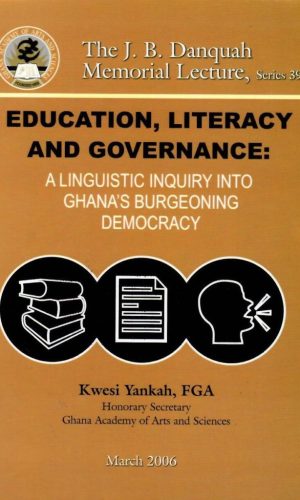
Education, Literacy and Governance: A Linguistic Inquiry into Ghana’s Burgeoning Democracy (The J.B. Danquah Memorial Lecture, Series 39; 2006)
Lectures delivered by Professor Kwesi Yankah. Delivered in March, 2006.
Lecture 1: Free Speech, Censorship and the Language Dilemma in Public Policy
Lecture 2: Krobo Edusei and the Paradigm of Street Wisdom in Contemporary Governance
Lecture 3: The Tongue, The Thumb and The Ballot Box
₵15.00 -
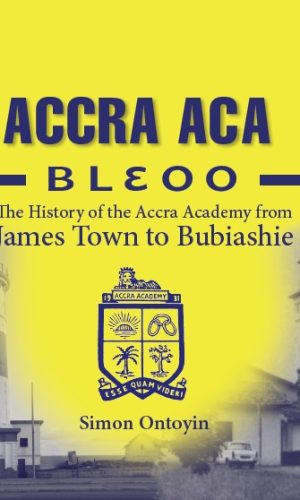
Accra Aca Blɛoo: The History of the Accra Academy from James Town to Bubiashie (Hardcover)
Accra Aca Bleoo – the first comprehensive history book on the Accra Academy – captures nine decades of the school’s history, including the most epic events and pivotal moments. It takes the reader through the life journeys of the founders and those who believed in their dream to educate the underprivileged youth of the Gold Coast. It also recounts the aspirations and achievements of successive administrations of the school and how they overcame the challenges of their time and influenced the character of their students.
The book brings to light several unknown facts about the Accra Academy and examines the educational policies that have influenced its development and growth.
It is not only informative and educative but also entertaining, as it is interspersed with interesting stories and several pictures that will undoubtedly take the minds of alumni back to the good old days and give other readers a perspective into how life in the school has evolved.
This book is the outcome of many hours of personal interviews and research, and is intended for anyone interested in the history of education in Ghana and what has made the Accra Academy what it is today.
₵200.00 -
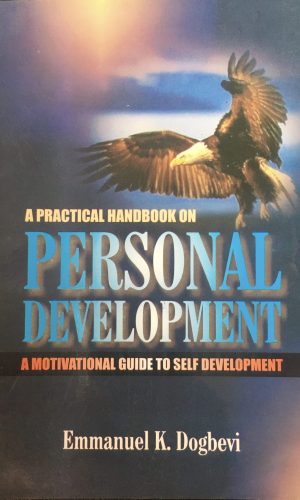
A Practical Handbook on Personal Development
“…one must first look into oneself before looking out for achievements. Thus self-knowledge as a foundation to personal development is crucial to any type of personal attainment. This is what this book is about!
It leads you step by step to discover your own potential and how you can skilfully release this potential to achieve a life that wins.” – The Late Rev. Prof. Elom Dovlo (Former Head of Department for the Study of Religions – University of Ghana, Legon) – Foreword
₵15.00 -
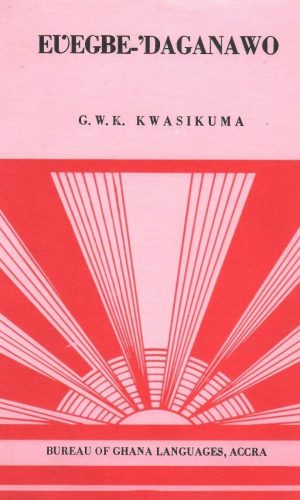
Eʋegbe-‘Daganawo (Ewe)
This book contains an alphabetic list of 1256 Ewe idioms and aphorisms with their meanings also given in Ewe.
The book is designed purposely for those who want to dive into Ewe classics and for students preparing for examinations requiring an advanced knowledge of Ewe.
₵18.00Eʋegbe-‘Daganawo (Ewe)
₵18.00 -
Twer Nyame (Mfantse)
Two maids hated a poor but well disciplined girl,Onnyibi,who was the idol of their mistress. Out of this jealousy,they stole their mistress’ very costly jewel and both bore witness against Onnybi. Onnyibi was deported.
She later defied the order and came back home only to be exonerated by one of the same two maids whose conscience pricked her.When the Chief read their deportation order to them ,Onnyibi rather pleaded for them after all the defamation and hardships suffered including the loss of her mother as a result of the deportation,
₵24.00Twer Nyame (Mfantse)
₵24.00 -
Anena’s Victory
Age Range: 8 – 10 years
The Adaex Reader in Moral Series uses everyday incidents in the community, the school, the home, the market place, the playing field and other places to encourage young readers to develop good manners, courtesy, health, and good habits and to grow into good respectable civic-minded students.
₵18.00Anena’s Victory
₵18.00 -
Trees in Our Lives
Age Range: 8 – 10 years
Adaex Living Youth Series are story books by some leading writers of stories for children. The stories are told in a captivating way, and help to enhance self-esteem and life skills of the youth to resist temptations that could easily lead them to ruin. This is down through stories that are drawn from the youth’s background, using characters they can identify with, and through experiences they are familiar with.
₵18.00Trees in Our Lives
₵18.00 -
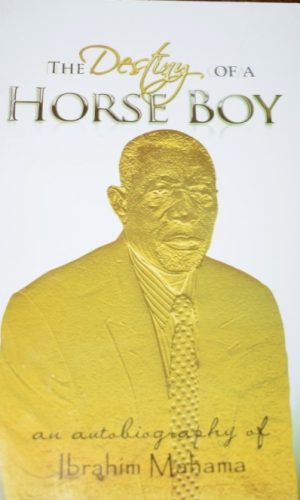
The Destiny of A Horse Boy
The Destiny of a Horse Boy, an autobiography, tells Mahama’s story of growing up as a member of the nobility in an Africa of bygone days. Raised by his grandparents, Mahama, an exceptional boy, starts life in the parched and inhospitable landscape of Northern Ghana, a far flung place that is thoughtfully, even lovingly, brought to life through the words of this prolific author.
His hunger to go to school, to be educated, to rise above his time and place, is so powerful that he runs away from home, travelling in cars that can sometimes go no faster than eight miles an hour, in decrepit trucks, on unreliable ferries and pontoons, past menacing wild animals, ultimately to present himself at a school and beg for admission. Once accepted, he studies through school holidays, excels at nearly every undertaking, and proves himself to be a remarkable young man. At a time when the literary rates were in the single digits, Mahama goes on to become a lawyer and a politician of influence and note, thanks to his integrity and his desire to better his country and the lives of his fellow countrymen in Ghana.
The Destiny of a Horse Boy delineates the steps from colonial rule to self-rule in Mahama’s beloved Ghana. He tells of violent, warring royal clans, the worst kinds of political jockeying and bloodshed at the hands of government lackeys, politicians and leaders who quite literally risk theirs lives in their quests for power.
This resourceful and accomplished man has left an indelible mark on Ghana and global politics.
₵60.00The Destiny of A Horse Boy
₵60.00 -
Some Critical Development Issues Facing Ghana (Proceedings, 2001)
Proceedings, 2001.
Papers included are as follows:
Ideology, Politics, Population and Development – Professor Fred T. Sai
The Nature and Place of Ideology – Professor Kwasi Agyeman
Political Power and Development – Professor Kwasi Ansu-Kyeremeh
Transforming Agriculture – Rev. Kwabena Darko
Transforming Industry in Ghana – Mr. Kwame Pianim
Social Transformation: Education, Culture and Human Development – Professor Miranda Greenstreet
Ensuring a Humane Society – Justice Emile Francis Short
Promoting Culture and Development in Contemporary Contexts – Professor J.H. Kwabena Nketia
₵20.00 -
Law & Religion
Inaugural Lectures
Lectures included in this collection are:
Religion and National Identity: Assessing the Discussion from Cicero to Danquah – Rev. Dr. Kwame Bediako (25 June 1997)
Private Investment and Law in a Developing Economy: Reflections – Dr. Samuel K. Date-Bah (22 January 2002)
The Role of the Judiciary in the Establishment of Democracy in Ghana – Mr. Seth Y. Bimpong-Buta (6 April 1999)
Theology and Culture: An African Perspective – Rev. Peter K. Sarpong (31 October 2002)
₵10.00Law & Religion
₵10.00 -
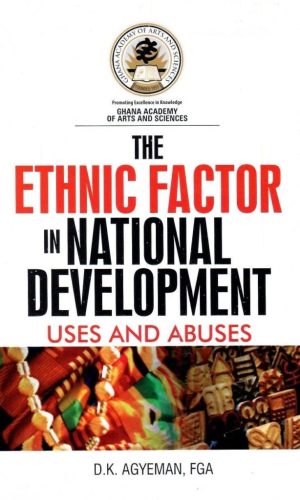
The Ethnic Factor in National Development – Uses and Abuses
Inaugural lecture by Professor Dominic Kofi Agyeman, Professor of Sociology, University of Cape Coast. Delivered on 28 February, 2005.
₵25.00