-
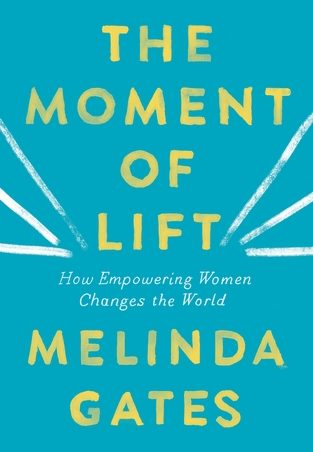
The Moment of Lift: How Empowering Women Changes the World
NEW YORK TIMES BESTSELLER
“In her book, Melinda tells the stories of the inspiring people she’s met through her work all over the world, digs into the data, and powerfully illustrates issues that need our attention―from child marriage to gender inequity in the workplace.” ― President Barack Obama“The Moment of Lift is an urgent call to courage. It changed how I think about myself, my family, my work, and what’s possible in the world. Melinda weaves together vulnerable, brave storytelling and compelling data to make this one of those rare books that you carry in your heart and mind long after the last page.”
― Brené Brown, Ph.D., author of the New York Times #1 bestseller Dare to Lead
“Melinda Gates has spent many years working with women around the world. This book is an urgent manifesto for an equal society where women are valued and recognized in all spheres of life. Most of all, it is a call for unity, inclusion and connection. We need this message more than ever.” ― Malala Yousafzai“Melinda Gates’s book is a lesson in listening. A powerful, poignant, and ultimately humble call to arms.” ― Tara Westover, author of the New York Times #1 bestseller Educated
A debut from Forbes’ third most powerful woman in the world, Melinda Gates; a timely and necessary call to action for women’s empowerment.“How can we summon a moment of lift for human beings – and especially for women? Because when you lift up women, you lift up humanity.”
For the last twenty years, Melinda Gates has been on a mission to find solutions for people with the most urgent needs, wherever they live. Throughout this journey, one thing has become increasingly clear to her: If you want to lift a society up, you need to stop keeping women down.
In this moving and compelling book, Melinda shares lessons she’s learned from the inspiring people she’s met during her work and travels around the world. As she writes in the introduction, “That is why I had to write this book―to share the stories of people who have given focus and urgency to my life. I want all of us to see ways we can lift women up where we live.”
Melinda’s unforgettable narrative is backed by startling data as she presents the issues that most need our attention―from child marriage to lack of access to contraceptives to gender inequity in the workplace. And, for the first time, she writes about her personal life and the road to equality in her own marriage. Throughout, she shows how there has never been more opportunity to change the world―and ourselves.
Writing with emotion, candor, and grace, she introduces us to remarkable women and shows the power of connecting with one another.
When we lift others up, they lift us up, too.
₵355.00 -
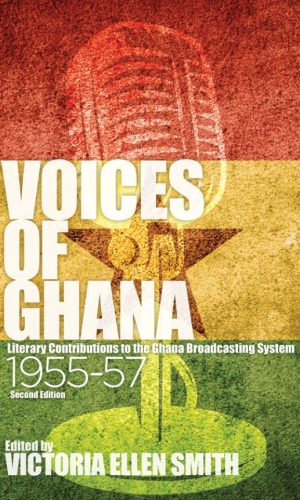
Voices of Ghana: Literary Contributions to the Ghana Broadcasting System, 1955-57 (Second Edition)
Ghana’s first radio programme of original literature, Singing Net, began in 1955 as part of the development of a national radio station in the years leading to independence in 1957. Its centralaim was to bring Ghanaian writers to the forefront of cultural programming as part of the Africanisation of radio in Ghana. It was a critical cultural expression of the radical changes that were unfolding across the colonial world. The programme successfully introduced listeners to a series of pioneering Ghanaian authors who would go on to become significant figures of Anglophone West African literature in the early postcolonial decades: Efua Sutherland, Frank Parkes, Amu Djoleto, Geormbeeyi Adali-Mortty, Albert Kayper-Mensah, Kwesi Brew, Cameron Duodu, J.H. Nketia and many others.
The anthology, Voices of Ghana (1958) is a collection of the poetry, short stories, play scripts and critical discussions that were aired on the Gold Coast (later Ghana) Broadcasting System (1954-1958).Both Singing Net and Voices of Ghana were edited by the BBC producer, Henry Swanzy.
The context of Ghana’s independence, the singularity of the anthology’s history, and the significance of many of the writers all contribute to the importance of this text. This second edition is a timely intervention into recent debates within postcolonial studies and world literature on the importance of broadcast culture in the dissemination of “new literatures” from the colonial world. It includes an unabridged version of the 1958 text, a new introduction and footnoted annotations,which draw on extensive research undertaken in Ghana and Britain. It will appeal to a general readership with an interest in Ghanaian literature, 1950s broadcast culture, the figure of Dr Kwame Nkrumah and the making of a national literature in the era of decolonisation, as well as engaging scholars. The new edition presents a deeply insightful and engaging history of Voices of Ghana and reintroduces the original works on the occasion of the anthology’s 60th anniversary.
Victoria Ellen Smith is a Lecturer in the Department of History, University of Ghana, Legon
₵65.00 -
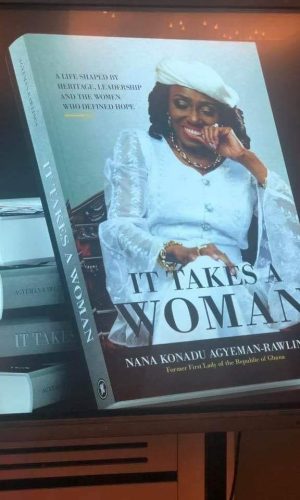
It Takes A Woman: A Life Shaped by Heritage, Leadership and the Women Who Defined Hope
It Takes a Woman retraces the early life of Agyeman‐Rawlings who rose to prominence as the First Lady of the Republic of Ghana (1982-2000). She redefined the privilege of serving a nation, and sought every platform to champion the causes of underserved citizenry and women. While her husband, former President Jerry John Rawlings, embarked on a relentless pursuit of transforming Ghana into a model of African democracy, Mrs. Agyeman-Rawlings founded the 31st December Women’s Movement (the 31st DWM), an organisation which played a pivotal role in the empowerment of women, and in addressing issues of systemic gender inequality, not only in Ghana but across the African region.
Born in an era when women were overtly marginalised, Nana Konadu Agyeman-Rawlings’ strong relationship with her father, mother and family elders formed the core of much of her formative years. Fortified by her unique family history, she was raised to never accept the notion that “there were some things she could not do, simply because she was a woman.”
The narrative captures the family history of a spirited little girl, and as she walks us through the refreshingly detailed scenes from her childhood, we are transported to a hopeful and quintessential Ghana, where a sense of national pride resounded powerfully at the time of independence. But as she recalls Ghana’s struggles post-independence, we are also confronted face to face with her juxtaposed emotions of elation and frustration, hurt and joy, certainty and dread. She was not to know that her personal life being upended early one morning in 1979 would also become a turning point in the nation’s history and would thrust her into the glare of international publicity.
It Takes a Woman, written with unflinching candour, is an absorbing portrait of a life devoted to public service and shaped by heritage. Above all, it is an account of resilience. The voices of the women who stood tall will forever inspire Agyeman-Rawlings to stand for many more whose voices may not be loud enough to stand on their own.
₵170.00