-
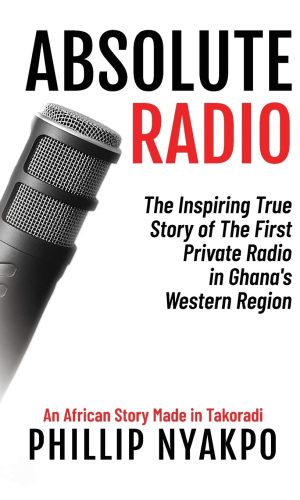
Absolute Radio: The Inspiring Story of the First Private Radio in Ghana’s Western Region
*Available from 6 September 2022
From the heart of Africa, a spellbinding true story of entrepreneurship, media, culture and tradition, all tastefully rolled into one! Absolute Radio is an authentic story of girls and boys who became women and men – and heroes – on the wings of a radio station. Running the course of 25 years, the story comes from the culturally stylish twin city of Sekondi-Takoradi in Ghana, with global footprints.
It is the most tantalising and ground-breaking body of work about Ghana’s private broadcasting industry. The author, former journalist Phillip Nyakpo, is himself an eye-witness and a participant in these true events.
From his base in Perth, Australia, Phillip interviewed women and men across four continents who made it happen over a quarter of a century.
The result is that he opened up to the world, a character and spirit of Africa that is all too often missing.
In telling the story, he writes a compelling narrative that is delicate, witty, eye-opening and wonderfully inspiring.
₵250.00 -
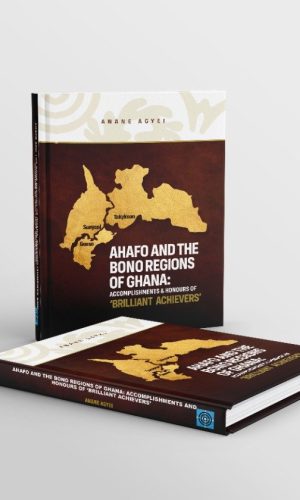
Ahafo and the Bono Regions of Ghana: Accomplishment & Honours of ‘Brilliant Achievers’ (Hardcover)
This book is a one-of-a-kind compendium of profiles of some distinguished citizens from Ahafo and the Bono Regions of Ghana. The book contains nuggets of inspiring biographical information that brings to the fore some men and women who have dared the oddities of life to challenge the debilitating issues of human existence.
The book is a guiding light for young people to emulate many successful Ghanaians, some of whom had humble beginnings but braced the odds to emerge as champions in their respective callings.
In addition, it is a must-read for professionals desiring to excel in their chosen careers and parents who want to inbue their children with a higher sense of confidence, patriotism and hope.
The first section of the book covers the profile of eminent natives of the Ahafo and the Bono regions who have contributed significantly to the development of the nation in all sectors, including chieftaincy, banking and finance, trade and industry, hospitality, diplomacy and farming, among others.
The second section talks about non-natives who had over the years also made a tremendous contribution to the regions and the nation while section three is a photographic presentation containing pictures of people such as female educationists, lawyers, ministers of state, regional ministers, sports personalities and some significant activities and events.
Additionally, the book contains photographs of all the chiefs and queen mothers of the former Brong Ahafo Region before it was carved into three regions.
It also has a six-page epilogue which contains the authors’ thoughts and also features all ministers of state who hailed from the regions.
₵250.00 -
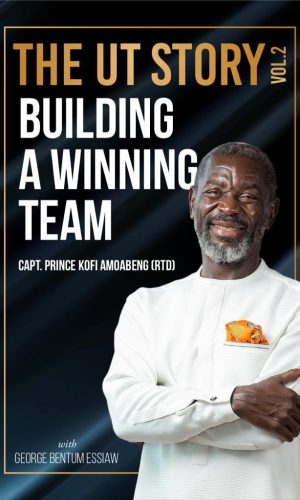
The UT Story: Building A Winning Team – Volume 2 (Hardcover)
*Available from 23rd February
In this second instalment of Capt. Prince Kofi Amoabeng’s (Rtd) memoirs, he discusses in painstaking detail, how he led his team to consolidate the gains made in the early days. He also dwells on how he established a unique corporate culture mainly through leading by example, and how essential that corporate culture was to the sustenance and growth of the business.PK, as he was affectionately called by his team, lays bare UT’s ambitious expansion drive which culminated in establishing branches in nearly all the regions of Ghana as well as the founding of subsidiaries in Nigeria, South Africa, and Germany.
If the first instalment of the UT Story was delightful and inspiring, this second instalment is insightful, touching and thought-provoking. And as always, it is an in-depth, no-holds-barred, unabashed account driven by the enigmatic figure of Capt. Prince Kofi Amoabeng (Rtd).
Written with George Bentum Essiaw, an award-winning writer, author and filmmaker.
₵250.00 -
From Britain to Bokoor: The Ghanaian Musical Journey of John Collins
Highlife, a popular West African genre, is easily the soundtrack to the life journey of the nation Ghana. And if there is one personality who has contributed the most to documenting it, it is Professor John Collins, a naturalized Ghanaian of British descent and a professor of music at the University of Ghana, Legon. Collins originally accompanied his parents to Ghana in 1952, when his father was setting up the philosophy department at the University of Ghana. Returning to Britain with his mother, Collins was educated in Bristol, Manchester and London, earning a science degree. He was also playing music and then he returned to Ghana in 1969 to study archaeology and sociology at the University of Ghana.
Eventually he himself became an academic teaching and researching popular music. This book captures the life and music career of Collins. What makes him an enigma is his personal involvement on the road as a guitar playing member of concert party bands. His working relations with Fela, E.T. Mensah, Kofi Ghanaba, Victor Uwaifo, Prof. J. H. Kwabena Nketia and many legendary names in the music space of West Africa make him a legend in his own right. This is the story of a “white man” man who came to Africa to legitimize the place of highlife as consequential to world music
₵250.00 -
The Pen at Risk: Spilling My Little Beans
“The Pen at Risk is more than a memoir. It is a piece of authentic, ungarnished history by a writer and public intellectual who is too modest to accept the title of a historian, but who witnessed and chronicled the most intriguing epochs of Ghana’s national life. Laced with the innate Fante humour, this book is a piece of deep but entertaining non-fiction that is told with the demystified simplicity of one of Ghana’s greatest academics and writers. Kwesi Yankah is a gift to humanity, and this memoir is a greater gift to an unfortunate generation like mine that did not live in the era of the incisive writings of the great Kwatriot.” – Manasseh Azure Awuni, Editor-in-Chief, The Fourth Estate
“When a citizen who has spent his whole life scrutinising society, turns the spotlight on himself, the risks include this epic engagement that spares no one, him included. In this bare-it-all memoir, the Yankah enigma is fully bared, warts and all. As it turns out, Yankah has had more than his fair share of privileged roles, ultimately impacting the national narrative. The richness of ethnography here, is as riveting as his urban-savvy accounts of the intrigues of university and national politics. While we watch him weave his wizardry of words, we are also awed by the totality of his humanity. The Pen at Risk is a hilarious package of eruditions. It is about the exalted gossips of our Motherland. The narratives are so sweet they hurt. If this isn’t the best book you have read in years, call me illiterate.” – Kofi Akpabli, Scholar, Author, Journalist
“In this memoir, Kwesi Yankah delivers a sparkling tableau of key aspects of his life, tabling his charmed childhood and amazing trajectory as an academic. He then rolls out his long stint as an audacious social commentator and columnist for leading papers (which may have put his pen at risk). With a penmanship characterized by a keen eye for detail, this autobiography is an entertaining and captivating book that should be read by all interested in media and social history as well as autobiography as a literary genre.” – Professor Mansah Prah, University of Cape Coast
“Intriguing, revealing, and brilliant. The Pen at Risk is unvarnished introspection beautifully strung together with anecdotes in a way that is vibrant and colorful. Kwesi Yankah’s work is a refreshingly modest invitation to see life through a different lens, even for a fleeting moment.” – Dr Obeng Amoako Edmonds, University of Southern California, Los Angeles, California
₵250.00 -
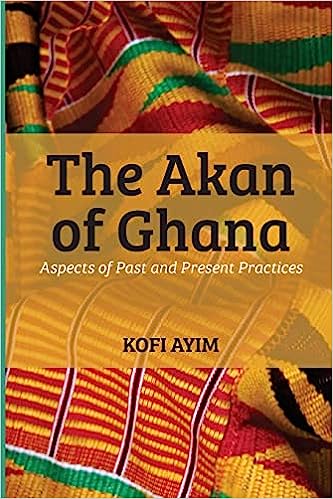
The Akan of Ghana: Aspects of Past and Present Practices
The Akan of Ghana: Aspects of Past and Present Practices takes the reader through the ancestry of present-day Akan people – from the influence of ancient Egypt, through the ancient Empires of Western Sudan and into the forest belt of present-day Ghana. Comparative analysis of cultural practices (such as kingship and the royal setup, death, funeral rites, and family structures) between ancient Egypt and present-day Akan people are highlighted. The three elements that make up an Akan person – Blood, Soul, and Spirit – as well as the Akan family structure are elaborately treated, and a clear cultural distinction between an Akan family and clan is explained. Names and their appellations, signs and symbols, as well as some kente designs are highlighted in the appendices. Ultimately, cultural challenges of the Akan in the contemporary world are brought to the fore.
₵265.00 -

Class Struggle In Africa
Recent African history has exposed the close links between the interests of imperialism and neo-colonialism and the African bourgeoisie. This book reveals the nature and extent of the class struggle in Africa, and sets it in the broad context of the African Revolution and the world socialist revolution.
₵270.00Class Struggle In Africa
₵270.00 -

Some Essential Features of Nkrumaism
This new and expanded edition is a valuable guide to the political thought of Nkrumah.
Part one, by the editors of The Spark (Accra), deals with Nkrumah’s policies to 1964.
Part Two, by the editors of Panaf Books, concerns the period after 1964.
Of particular significance in the new Part Two is a survey of the very important books written by Nkrumah during the Conakry period between March 1966 and August 1971.
The themes include: forms of the independence struggle; colonialism, imperialism and neocolonialism; economic development; the role of the vanguard party; class struggle; and the unification of Africa.
₵270.00 -
Patrice Lumumba (Panaf Great Lives)
This book considers the first years of the Congo Republic following independence in 1960. Particular analysis is made of Lumumba’s policies and of western pressures in this crucial experience of the African Revolution.
The story of Lumumba underlines the correctness of Nkrumah’s Pan-African thesis.
₵270.00 -

Frantz Fanon (Panaf Great Lives)
Required reading for all interested in the Algerian Revolution, and in Fanon’s brief but highly productive contribution. A close study is made of the relationship between Fanon’s ideological development and the content and impact of his political philosophy.
₵270.00Frantz Fanon (Panaf Great Lives)
₵270.00 -
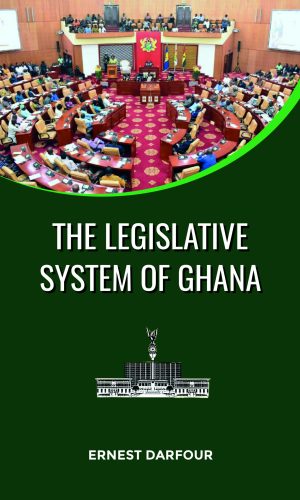
The Legislative System of Ghana
This book focuses on the legislative system of Ghana. It contains sixteen chapters, each focusing on a unique aspect of the legislative system of Ghana. It outlines the rules, the practice, and procedure that govern the conduct of business and Members in the Parliament of Ghana and its committees, and the various actors involved in the organisation of the legislative business. It breaks into minute forms, the procedural norms, and attitudes that influence members’ behaviour and the various parliamentary outcomes.
“This study is well researched and presented in a very lucid form…. Indeed, it is a very useful source for students, parliamentarians, and academics on the parliamentary history, procedure, and practice of Ghana’s Parliament.” – Hon Dr. Benjamin Kunbour, Former Majority Leader, Former Minister of Defence and Senior Lecturer, University of Ghana School of Law
₵300.00The Legislative System of Ghana
₵300.00 -
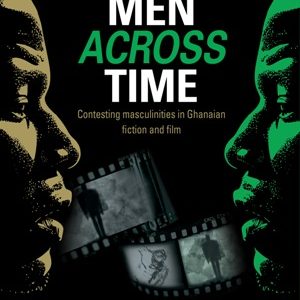
Men Across Time: Contesting Masculinities in Ghanaian Fiction and Film
Men Across Time: Contesting Masculinities in Ghanaian Fiction and Film examines the various constructions and manifestations of masculinities from precolonial, colonial, independent and post-independent Ghana as portrayed in selected Ghanaian fiction, film and music videos. Two main questions are engaged here:
- What predominant masculine images are present in Ghanaian texts?
- In what ways has the passage of time affected the subversion of dominant masculine images, contested hegemony and created room for the presence of alternative masculinities?
This book submits that in questioning the various masculine modes of behaviours portrayed in these texts, and negotiating their own masculine identities, the male characters showcase the mutations that are taking place within masculine representations over time and aver that other models of masculine expression are possible.
“This study’s engagement with the theory of hegemonic masculinity represents an important contribution to the discourse in gender studies in Ghana and Africa. In addition, it is well researched and presents a cutting-edge analysis of masculinity across genres. I cannot think of any other study in Ghanaian literary and cultural studies that provides such a broad historical background context and the book is certainly original in its approach.” — Professor Mansah Prah, Department of Sociology and Anthropology, University of Cape Coast, Ghana
“The book’s major strength is in adding significantly to an area of study that is currently under theorised. This has the potential to make a robust and important contribution to the field of knowledge on representation of masculinities in African and specifically Ghanaian popular culture.” — Associate Professor Nicky Falkof, Media Studies, University of the Witwatersrand, South Africa
₵300.00