-
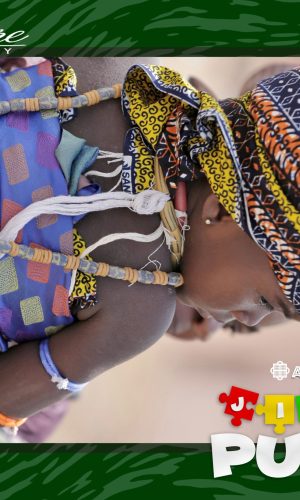
Abusua Pa Jigsaw Puzzle: Cultural Regalia (500 Puzzle Pi0eces) – Pre-Order
Cultural regalia in Ghana holds deep significance as it represents the identity, traditions and heritage of different ethnic groups. It carries symbolic meaning, is worn during important ceremonies, and connects present generations to their ancestors.
Cultural regalia preserves traditional craftsmanship, attracts tourism, and fosters community cohesion. It serves as a visual expression of cultural pride and plays a vital role in preserving Ghana’s rich cultural heritage for future generations.
₵500.00 -
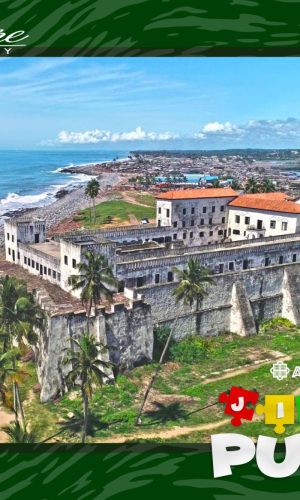
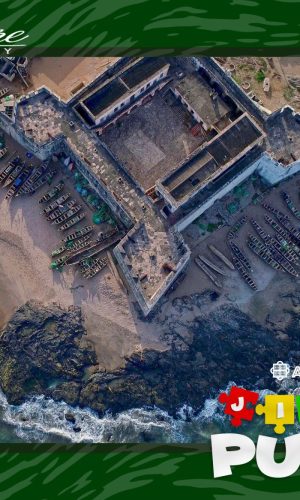
Abusua Pa Jigsaw Puzzle: Cape Coast Castle (216 Puzzle Pieces) – Pre-Order
Cape Coast Castle is a historic fortress located in the town of Cape Coast, a city in the Central Region of Ghana. It was built by the Swedes in 1653 but was later captured and expanded by the British in 1664. The castle played a significant role in the transatlantic slave trade and served as a major hub for the transportation of enslaved Africans to the Americas.
The castle’s imposing structure, with its thick walls and cannons, served as a symbol of European power and dominance in the region. It was strategically positioned on the promontory overlooking the Gulf of Guinea, allowing for easy control and monitoring of maritime activities.
Within the castle’s walls, enslaved Africans were held captive in cramped dungeons under inhumane conditions. The “Door of No Return” is a poignant feature of Cape Coast Caste, as it represents the final exit point for enslaved Africans who were forced onto ships bound for the Americas, never to return to their homeland.
Today, Cape Coast Castle stands as a UNESCO World Heritage site and a museum, preserving the memory and history of the transatlantic slave trade. Visitors can explore the castle’s various chambers, including the slave dungeons, and gain insight into the harrowing experiences endured by millions of Africans during that dark period.
Cape Coast Castle serves as a somber reminder of the atrocities committed during the slave trade and provides an opportunity for reflection and education about the important of human rights and social justice.
₵450.00 -
Abusua Pa Jigsaw Puzzle: Local Beads (216 Puzzle Pieces) – Pre-Order
Local beads in Ghana hold immense cultural significance as they represent social status, ethnicity and heritage. They serve as visual language, conveying messages and symbolizing various meanings such as fertility, wealth, spirituality and social hierachy. Beads are integral to traditional ceremonies and rituals, bringing blessings and enhancing spiritual connections.
They also contribute to Ghana’s economy through artisanal production and trade. Local beads have found a place in contemporary fashion while preserving Ghana’s cultural heritage and promoting cultural preservation. Overall, Ghanaian beads are an essential part of the country’s identity and play a vital role in communication, cultural expression and economic activities.
₵450.00 -
Abusua Pa Jigsaw Puzzle: Fort William (216 Puzzle Pieces) – Pre-Order
Fort William, originally known as Fort Anomabo, is a historic fortress located in Central Region of Ghana. During the 19th century, under the command of Brodie Cruickshank, the fortress was renamed Fort William in honour of King Charles II.
Constructed primariily using local resources, this remarkable stronghold earned the reputation of being one of the most splendidly designed and sturdily built fortresses along the coast.
Throughout its existence, it served diverse purposes. Initially functioning as a rest house and a post office, Fort William underwent a transformation and was repurposed as a state prison, a role it fulfilled until 2001. Today, the fort has undergone another metamorphosis and currently serves as a community library, enriching the lives of the people of Anomabu. This conversation not only preserves its historical significance but also stands a a beacon of knowledge and learning within the local community.
₵450.00 -
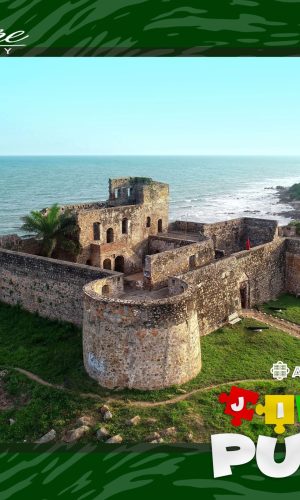
Abusua Pa Jigsaw Puzzle: Fort Amsterdam (216 Puzzle Pieces) – Pre-Order
Fort Amsterdam is a historic fort located in the town of Abandze in the Central Region of Ghana. It was built by the Dutch in 1638 as a trading post for gold and ivory, and later served as a slave trading station.
The fort was strategically located on a hill overlooking the Atlantic Ocean, allowing the Dutch to have a clear view of incoming ships. It was also built with stone walls and cannons to protect against attacks from rival European powers and indigenous groups.
During its occupation by the Dutch, Fort Amsterdam was an important center for the transatlantic slave trade, with thousands of Africans passing through its gates before being shipped off to the Americas.
Today, the fort is a popular tourist attraction and a reminder of Ghana’s colonial past. Visitors can tour the grounds and learn about the fort’s history through exhibits and guided tours.
₵450.00 -
Abusua Pa Jigsaw Puzzle: Chief Dancing (140/216 Puzzle Pieces) – Pre-Order
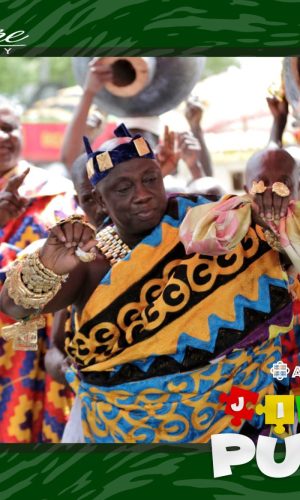
A Chief’s Dance in Ghana holds great cultural significance as a symbol of the chief’s authority, heritage and community unity. It preserves Ghanaian traditions and passes down ancestral knowledge. The dance has ritual and spiritual elements and honours ancestors and historical lineage.
It showcases cultural identity and attracts tourists, promoting cultural pride and understanding. The Chief’s Dance plays a vital role in Ghanaian society, connecting the past with the present and ensuring the continuity of cultural heritage.
₵450.00 -
Abusua Pa Jigsaw Puzzle: The Black Star Square (216 Puzzle Pieces) – Pre-Order
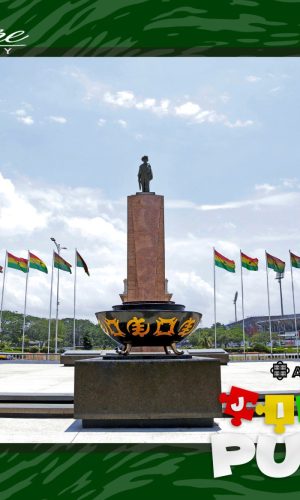
Independence Square, also known as Black Star Square, is a landmark in Accra, Ghana, with historical and cultural significance. It serves as the venue for Ghana’s Independence Day celebrations and features symbolic elements like the Independence Arch and the Independence Square Monument. The square is one of the world’s largest and can accommodate large gatherings. It has surrounding landmarks and is open to the public for recreational activities. Independence Square holds historical significance as the site where Ghana proclaimed its independence from British colonial rule in 1957. It stands as a symbol of national pride and hosts events that commemorate Ghana’s freedom.
The soldier facing the Independence Arch in Ghana symbolizes the country’s struggle for independence and its emergence as the first sub-Saharan African nation to gain freedom from British colonial rule. The soldier represents the Ghanaian military’s dedication to protecting the nation’s sovereignty and symbolizes the courage and sacrifice of the people in their fight for self-rule. It serves as a reminder of Ghana’s commitment to preserve its independence, uphold values of freedom and democracy, and promote national unity. Overall, the soldier facing the Independence Arch represents the historical significance of Ghana’s independence, the contributions of the military, and the ongoing commitment to safeguard the nation’s sovereignty.
₵450.00 -
The Akan of Ghana: Aspects of Past and Present Practices
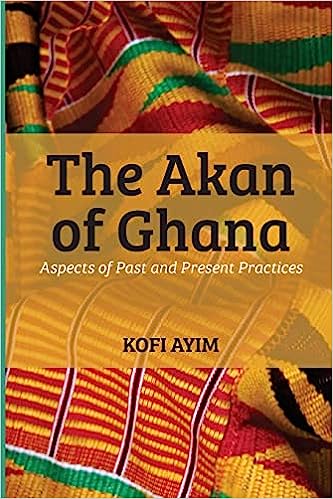
The Akan of Ghana: Aspects of Past and Present Practices takes the reader through the ancestry of present-day Akan people – from the influence of ancient Egypt, through the ancient Empires of Western Sudan and into the forest belt of present-day Ghana. Comparative analysis of cultural practices (such as kingship and the royal setup, death, funeral rites, and family structures) between ancient Egypt and present-day Akan people are highlighted. The three elements that make up an Akan person – Blood, Soul, and Spirit – as well as the Akan family structure are elaborately treated, and a clear cultural distinction between an Akan family and clan is explained. Names and their appellations, signs and symbols, as well as some kente designs are highlighted in the appendices. Ultimately, cultural challenges of the Akan in the contemporary world are brought to the fore.
₵265.00 -
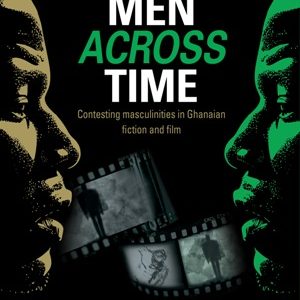
Men Across Time: Contesting Masculinities in Ghanaian Fiction and Film
Men Across Time: Contesting Masculinities in Ghanaian Fiction and Film examines the various constructions and manifestations of masculinities from precolonial, colonial, independent and post-independent Ghana as portrayed in selected Ghanaian fiction, film and music videos. Two main questions are engaged here:
- What predominant masculine images are present in Ghanaian texts?
- In what ways has the passage of time affected the subversion of dominant masculine images, contested hegemony and created room for the presence of alternative masculinities?
This book submits that in questioning the various masculine modes of behaviours portrayed in these texts, and negotiating their own masculine identities, the male characters showcase the mutations that are taking place within masculine representations over time and aver that other models of masculine expression are possible.
“This study’s engagement with the theory of hegemonic masculinity represents an important contribution to the discourse in gender studies in Ghana and Africa. In addition, it is well researched and presents a cutting-edge analysis of masculinity across genres. I cannot think of any other study in Ghanaian literary and cultural studies that provides such a broad historical background context and the book is certainly original in its approach.” — Professor Mansah Prah, Department of Sociology and Anthropology, University of Cape Coast, Ghana
“The book’s major strength is in adding significantly to an area of study that is currently under theorised. This has the potential to make a robust and important contribution to the field of knowledge on representation of masculinities in African and specifically Ghanaian popular culture.” — Associate Professor Nicky Falkof, Media Studies, University of the Witwatersrand, South Africa
₵300.00 -
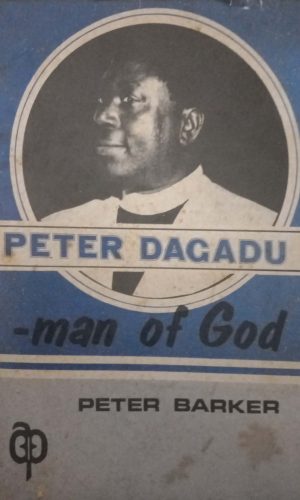
Peter Dagadu: Man of God
Usually we know those men who have influenced church and nation only by reputation, as it were from the outside. In this book we have the rare privilege of seeing such a man at close quarters his childhood and schooling, how he came to Christ, the struggles and problems he went through in short, what made him the man of God he was.
Though Peter Dagadu died so many years ago, there are thousands who knew him and who will find in this account the secret of a man they admired but did not always understand: To many others, both lay and ordained, the story of Peter Dagadu will prove a challenge to climb the upward path following in his footsteps.
Peter Barker came to Ghana in 1956, after studying history and theology at Oxford, to work on the magazine New Nation, of which Peter Dagadu was a member of the advisory board. He later taught French and history at Okuapemman and La Bone secondary schools, and in 1961 began a two-year course of study for the London BD at Trinity College (then in Kumasi). After three years as pastor of Kaneshie Presbyterian Church and editor of Christian Messenger, he was seconded to the Christian Council as secretary of the Literature Committee and later manager of Asempa Publishers.
₵25.00Peter Dagadu: Man of God
₵25.00 -
Amu the African (Children’s Edition)
This is the children’s edition of the earlier book, Amu the African, A Study in Vision and Courage, written by Fred Agyeman. From this book, we can learn about the qualities of selflessness, originality, regard for Africaness etc. which characterised the life of this renowned Ghanaian educationist and reformist, Dr Ephraim Amu.
The book seeks to inspire the youth to emulate the good example of Dr Amu – a personality who has influenced for good, many pupils and students in his 50 years of teaching.
In this children’s edition, Fred Agyemang and Phanuel Nyaku have retold the story of Amu in simple, easy-to-read narrative form.
This book is highly recommended for Ghanaian children to help them absorb some of the values we cherish from our traditional heritage as eminently exemplified in the life of Dr Ephraim Amu.
Not since Dr Kwegyir Aggrey has any other Ghanaian influenced more positively the development of Ghanaian culture and pride in the African Personality than Dr Ephraim Amu.
₵35.00 -
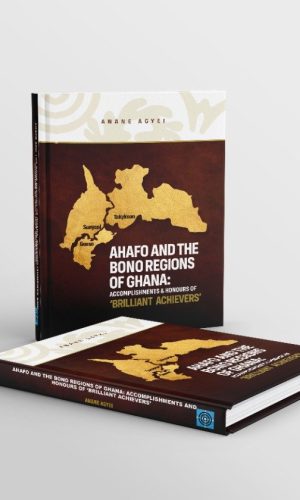
Ahafo and the Bono Regions of Ghana: Accomplishment & Honours of ‘Brilliant Achievers’ (Hardcover)
This book is a one-of-a-kind compendium of profiles of some distinguished citizens from Ahafo and the Bono Regions of Ghana. The book contains nuggets of inspiring biographical information that brings to the fore some men and women who have dared the oddities of life to challenge the debilitating issues of human existence.
The book is a guiding light for young people to emulate many successful Ghanaians, some of whom had humble beginnings but braced the odds to emerge as champions in their respective callings.
In addition, it is a must-read for professionals desiring to excel in their chosen careers and parents who want to inbue their children with a higher sense of confidence, patriotism and hope.
The first section of the book covers the profile of eminent natives of the Ahafo and the Bono regions who have contributed significantly to the development of the nation in all sectors, including chieftaincy, banking and finance, trade and industry, hospitality, diplomacy and farming, among others.
The second section talks about non-natives who had over the years also made a tremendous contribution to the regions and the nation while section three is a photographic presentation containing pictures of people such as female educationists, lawyers, ministers of state, regional ministers, sports personalities and some significant activities and events.
Additionally, the book contains photographs of all the chiefs and queen mothers of the former Brong Ahafo Region before it was carved into three regions.
It also has a six-page epilogue which contains the authors’ thoughts and also features all ministers of state who hailed from the regions.
₵250.00