-
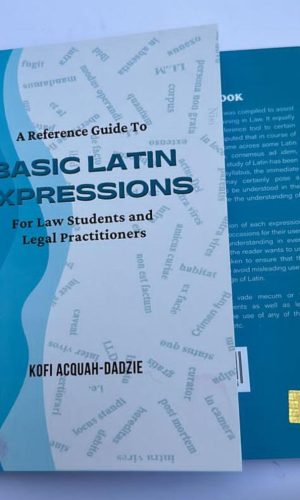
A Reference Guide to Basic Latin Expressions for Law Students and Legal Practitioners
A Reference Guide to Basic Latin Expressions for Law Students and Legal Practitioners
₵80.00 -
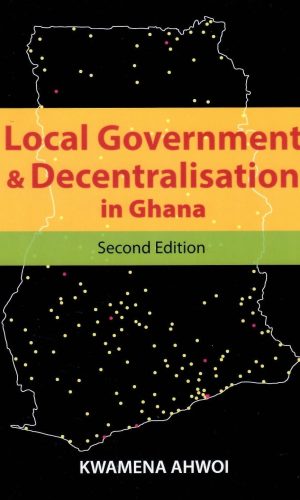
Local Government and Decentralisation in Ghana
Developments since the publication of the First Edition of this book in 2010 have compelled the revision and publication of this Second Edition.
In 2011, the Fifth Government of the Fourth Republic launched a new ‘National Decentralisation Policy Framework’ (NDPF 1) and an accompanying National Decentralisation Action Plan’ (NDAP 1). The Local Government Service was operationalised in the same year, resulting in the migration of over 30,000 civil servants from the Civil Service to the Local Government Service.
Prior to these, the Local Government Departments of District Assemblies) (Commencement) Instrument, 2009, L.1. 1961, had been enacted, allowing for the conversion of the de concentrated Departments at the district level into devolved Departments of the District Assemblies. The Local Government (Urban, Zonal and Town Councils and Unit Committees) (Establishment) Instrument, L.1. 1967, was enacted in 2010. The long-awaited Composite Budget was introduced in 2012.
With the expiry of the NDPF 1/NDAP I in 2014, a new NDPF 11/NDAP 11 was launched in 2015 for the period 2015-2019.
A new Local Government (Sub-Metropolitan District Councils of Metropolitan Assemblies (SMDCs)) (Establishment, Composition and Functions) Instrument, 2015. 11. 2223, was enacted to provide for uniform composition and functions for the SMDCs in all the six Metropolitan Assemblies.
A National Development Planning (System) Regulations, 2016, enacted to support the National Development Planning and Act, 1994, 148. A Land Use and Spatial Planning Act, 2016, Act 925, was passed to establish a Land Use and Spatial Planning Authority and to devolve the Department of Country Planning to the MMDAs.
The disparate laws on local government were consolidated into one Local Governance Act, 2016, Act 936. A new Sports Act 2016, Act 934 and a new decentralised National Youth Authority Act 939 were also enacted.
It is these reforms that the Second Edition of the book has sought to capture, in addition to some elaborations on some of the theoretical underpinnings of local government and decentralisation in Ghana. The sections of Acton Civil Society Organisations and Non-State Actors and Women in Local Governance have been improved. Some aspects of the proposals of the Constitutional Review Commission on local government and decentralisation have been used. Some textual changes have also been made.
₵95.00 -
Decentralisation Reforms in Ghana: The Experiences of the Fifth and Sixth Governments of the Fourth Republic
What were the decentralisation reforms? What did they consist of? What were their origins? Who authorised them? What were their outcomes? What Impact have they had on the local governance and decentralisation landscape In Ghana?
The answer to the first question is that they were new initiatives and innovations designed to accelerate the pace of and improve upon decentralisation implementation in Ghana.
The answer to the second question is that they consisted of a National Decentralisation Policy Framework and a National Decentralisation Action Plan I (2010-2014) and II (2015-2019), an Inter-Ministerial Coordinating Committee on Decentralisation (IMCC), an expansion in the number of districts, a consolidated Local Governance Act, a re-branding of the Office of the Head of Local Government Service, the operationalisation of the Local Government Service and the introduction of a system of Inter-Service/Inter-Sectoral Collaboration and Cooperation. It also covered the enactment of National Development Planning (System) Regulations and a Land Use and Spatial Planning Act, the introduction of a Regional Integrated Budget System (RIBS) and blueprints for an Inter-Governmental Fiscal Framework (IGFF) and an Inter-Governmental Fiscal Transfer (IGFT) system.
The answer to the third question is that the reforms were traceable to the 2008 manifesto of the National Democratic Congress (NDC), the party which won the Presidential and Parliamentary elections of 2008 and 2012 and therefore formed the Fifth and Sixth Governments of the Fourth Republic.
The answer to the fourth question is that the reforms were authorised by Presidents John Evans Atta Mills and John Dramani Mahama who successively were Presidents of the Fifth and Sixth Governments of the Fourth Republic.
The answer to the fifth question about outcomes is the new structures, procedures and processes for decentralisation implementation, the improved quality of human resources in the local government sector, and the more efficient systems of checks and balances in the sector.
The answer to the sixth question lies in the District Assemblies (MMDAs), the better service delivery by the Metropolitan, Municipal and of service delivery, the renewed interest in local governance by the citizenry and the claro Si rate reforms such as the elections of Metropolitan, Municipal and District Chief Executives (MMDC Wand making the MMDAs partisan.
These and answers to other questions posed by the reforms are answered in this book by the two people who should know, namely, the authors Professor Kwamena Ahwoi and Dr Callistus Mahama.
Professor Kwamena Ahwoi is the longest-serving Minister of Local Government and Rural Development in Ghana (1988-2000). He was the Chairman of the High Level Strategic Task Force that produced the Decentralisation Policy Frameworks and Action Plans, He chaired the Legislative Review Task Force that resulted in the enactment of the Local Governance Act, 2016, Act 936 and was consultant to both the Ministry of Local Government and the IMCC during the period.
Dr. Callistus Mahama was a member of the High Level Strategic Task Force, a member of the Legislative Review Task Force, the Executive Coordinator of the IMCC and the Head of the Local Government Service during the period.
The two authors therefore write from a position of knowledge and experience and this is reflected in the contents of the book.
₵95.00 -
Knowledge Management and Network for Capacity Development: A Focus on Institute of Directors Ghana (Hardcover)
The book examines how directors in Ghana share tacit knowledge and experiences on the board. The rationale is that there is the tendency for boards In Ghana to lose tacit knowledge, experiences, skills and particularly up to date knowledge required to inform their decision making due to lack of practical knowledge management system for directors’ capacity development. The focus is to examine how the Institute of Directors Ghana (IODG) can manage knowledge with the view to tackling challenges leading to losing tacit knowledge, experiences, and skills of boards in Ghana.
The objective is to influence boards of organizations in Ghana to recognize and initiate knowledge management practices, as well as adopt policies that support the application of practical knowledge management systems and interpersonal networks for directors’ capacity development in Ghana.
The results revealed the existence of records of minutes of meetings indicating a latent existence of knowledge management system within organizations but not formalized as a knowledge management system. Also, significantly missing was technology for knowledge transformation.
The book recommends knowledge management systems backed by technology for acquiring and sharing directors’ knowledge for successful knowledge transformation.
₵100.00 -
Medical Microbiology Simplified (2nd Edition)
The first edition of this title was published in 2012 with two main sections covering Bacteriology and Mycology. It provided students with a quick, updated, concise and an easy to understand text on medical microbiology. Each chapter discussed a set of closely related pathogens by focusing on their epidemiology, pathogenesis, laboratory diagnosis, treatment, prevention and control. These discussions were made against the backdrop of relevant historical contexts and current trends in molecular biology, bioinformatics and contemporary global health perspectives. The book was well received by both students and faculty and this has largely motivated a second edition.
The current edition is a revision of the first with additional content covering organisms not captured earlier. The present edition now includes sections on Parasitology and Virology to provide the full range of Microbiology disciplines. The sole author of the first edition (Dr. Mrs. Dorcas Obiri-Yeboah) invited other experts to contribute to the second edition. These experts were drawn from the Department of Microbiology and Immunology of the School of Medical Sciences, University of Cape Coast and included Prof. E. E. Brako and Dr. Victor Nuvor who contributed to the virology section; Mr. Daniel Amoako-Sakyi, Mrs. Faustina Pappoe and Mr. Kwabena Dankwa contributed the parasitology section.
This edition still aims to provide a concise, updated and easy to understand text for all range of students of Medical Microbiology. It is unique in its ability to teach complex concepts in an easy to grasp manner. Illustrations are included to aid comprehension of the subject where necessary. The text also takes time to succinctly describe and explain the virulence factors of viral, bacterial and fungal pathogens. It also explains the complex life cycles of parasites and how they have co-evolved to be checked up with their human host.
It is hoped that this second edition help readers to gain understanding of the subject and further develop their love for the great field of Medical Microbiology.
₵100.00 -
A Guide to Autopsy Practice in Ghana (Hardcover)
This book is meant to guide the Ghanaian resident doctor, district and regional medical officers, medical students, non-medical personnel such as police detectives and traffic officers and lawyers through the rudiments of autopsy practice. It sheds light on the benefits of the autopsy, autopsy practice and the laws that govern autopsy practice and general academic dissections. It also discusses religion and the autopsy and is thus useful to religious leaders and curious general readers who may not belong to any of the above stated professions.
In addition it discusses the rudiments of death certification with relevant examples and will be useful to nosologists and other health officials responsible for collecting and coding data related to cause of death certificates. It entrenches the role of the clinical pathologists who is a part of the clinical team by introducing the perspectives and relationship of various clinicians to autopsy practice.
₵100.00 -
A History of Indigenous Slavery in Ghana: From the 15th to the 19th Century
Academic research and publication on indigenous slavery in Ghana and in Africa more widely have not received attention commensurate with the importance of the phenomenon: the history of indigenous slavery, which existed long before the trans-Atlantic slave trade, has been a marginal topic in documented historical studies on Ghana. Yet its weighty historical, and contemporary relevance inside and outside Africa is undisputed.This book begins to redress this neglect. Drawing on sources including oral data from so-called slave descendants, cultural sites and trade routes, court records and colonial government reports, it presents historical and cultural analysis which aims to enhance historical knowledge and understanding of indigenous slavery. The author further intends to provide a holistic view of the indigenous institution of slavery as a formative factor in the social, political and economic development of pre- colonial Ghana.₵120.00 -
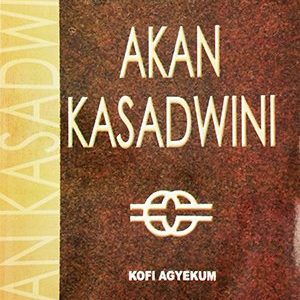
Akan Kasadwini (Akan Oral Literature)
The book is a pioneering work of Akan oral literature written in the Akan language. It gives a theoretical view of oral literature and a detailed account of the major genres of oral literature in Akan. It deals with an introduction to literature and some aspects of stylistics. It ushers students of literature into some of the crucial issues of literature. The book deals with what literature is, and what it can afford to individuals and the society as a whole. It considers literature as an indispensable aspect of any society’s life. It also identifies the main characteristics of literature with specific reference to oral literature.
The book treats some of the major terms in literature and supports them with examples. The book has 25 chapters and each chapter addresses, performance, composition, structure, functions and literary devices. Each chapter ends with sample questions that will help students to revise what they have learned from the chapter.
The book is in response to the needs of students at the WASSCE, Diploma and Degree levels to the subject matter of oral literature in Akan. This book will also help Training College students both in their course work at college and also in their teaching.
₵120.00 -

Contemporary Issues in Ageing in Ghana: A Multidisciplinary Approach
The rise in population of the aged (also known as elderly, older persons, old adults, senior citizens) across the universe has become a global concern given the associated demographic, social and economic implications for the well-being of the aged. This increase has implications for future generations as well as the social and economic development of the country.
This book, being the first from the Centre for Ageing Studies at the University of Ghana advocates for the study of ageing in many facets from health, science, and socioeconomic perspectives.
It is our hope that the book provokes dialogue and serves as the beginning of many more avenues for academic discourse to embrace diverse views and science as the way forward. At the very least, this should motivate others to focus on ageing issues than ever before.
Given the numerous challenges associated with ageing and the neglect of the welfare of the aged in Ghana, it is imperative that we pay attention to the plight of the elderly in our African societies. There is an argument to extend ageing issues to the larger population. It is hoped that Ghana would once again be the beacon of hope for research in ageing in sub–Saharan Africa with the Centre for Ageing Studies at the University of Ghana leading the way.
₵150.00 -
Understanding TVET in Africa: A Collection of Selected Public Lectures and Journal Articles
This book makes a strong case for the promotion of technical and vocational education and training (TVET) in Africa. It is a collection of selected journal articles on TVET and public lectures delivered by the author in several African countries, including Ghana, Kenya, Nigeria and South Africa.
In a simple and clear language, the book explains the role of TVET in producing the skilled workforce that African countries need for industrialisation and transformation of their economies. It spells out strategies and policy actions that need to be implemented by key stakeholders in government and industry to derive the full socioeconomic benefits of investing in TVET, which include decent livelihoods for the youth, community wellbeing, sustainable economic growth, and protection of the environment.
The topics treated in the book range from modernising traditional apprenticeships in the informal economy to higher level TVET education in polytechnics and technical universities in Africa. The book will therefore be useful reading and reference material for policy and decision makers in education and training systems, TVET system managers, students, TVET researchers, and parents, as well as persons interested in understanding TVET provision and its critical role in national socioeconomic development.
₵150.00 -
Selected Papers and Lectures on Ghanaian Law (Hardcover)
This book is a compendium containing chapters based on various papers and lectures on Ghanaian law delivered by the author. Its contents deal with a wide range of topics expected to be of interest, not only to Ghanaian lawyers, but also to lawyers in general and other persons interested in the legal process in developing countries.
The topics include the legal system and legal education in Ghana, the Judiciary, human rights and good governance, and business law.
The variety of topics treated means that the book can be regarded almost as a mini Reader on Ghanaian law.
₵200.00 -
Law of Contract: With Special Reference to the Law of Ghana
Law of Contract: With Special Reference to the Law of Ghana
₵225.00