-
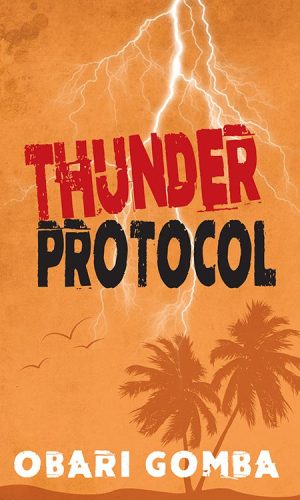
Thunder Protocol
Thunder Protocol is a mid-career oeuvre of lively and impressive poems that examine issues ranging from the personal to the global. The diversity of themes in this poetry collection is both refreshing and startling, with language that is sometimes witty and inventive, and other times reflective and simple. This collection, which seems like an uncovering of the poet, may be considered a bearer of a collective understanding on the workings of the world.
₵55.00Thunder Protocol
₵55.00 -
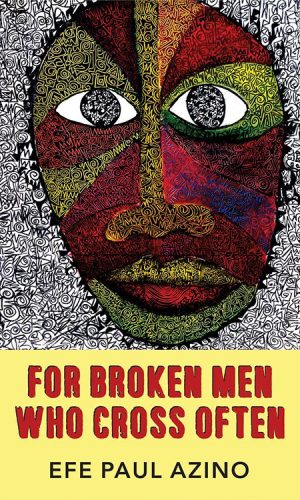
For Broken Men Who Cross Often
Efe Paul Azino’s spoken word performances have received critical acclaim from listeners over the years. This book is therefore an expected result of a heightened expectation from many of his fans. For Broken Men Who Cross Often, is a refreshing and brilliant bond of the written and the oral, as it invents aesthetic devices to connect the two mediums which have constantly generated wide debate: spoken word and poetry-on-the-page. The author, in his writing, resonates through his themes of advocacy, love, loss, identity and history, the need for a revisit of the inner self. In Efe Paul Azino, we will always listen to tradition in present-day voice.
₵55.00 -
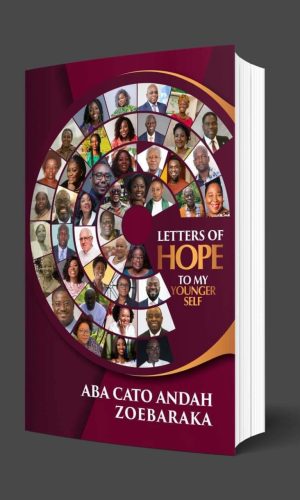
Letters of Hope To My Younger Self
A legacy project, Letters of Hope to My Younger Self is a compilation of testimonials and inspirational stories from notable Ghanaians across the globe. They too, experienced failure, fears, discouragement, and missteps. Knowing what they have been able to overcome and then go on to achieve in life, tells us that we too, have the power to break through our challenges and achieve higher heights.
Throughout the book, readers will learn about the challenges and lessons that have impacted individuals across generations.
₵175.00 -
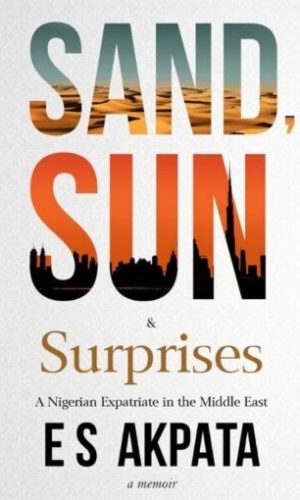
Sand, Sun & Surprises: A Nigerian Expatriate in the Middle East – A Memoir
Sand, Sun & Surprises is a personal story told by a Nigerian Professor about his experiences and observations working in, and visiting countries in the Middle East over 23 years.
The 316-page memoir includes descriptions of the social life, leisure and religious practices in the region. It captures a snapshot of the socio-economic landscape of Nigeria reeling from the economic depression of the late 1980s and the surprising contrasts with Saudi Arabia and Kuwait, societies adjusting to dramatically improved standards of living as a result of their massive oil wealth.
This book is a compelling read for those who intend to visit or work in the Middle East, or indeed pursue careers outside their countries.
₵135.00 -
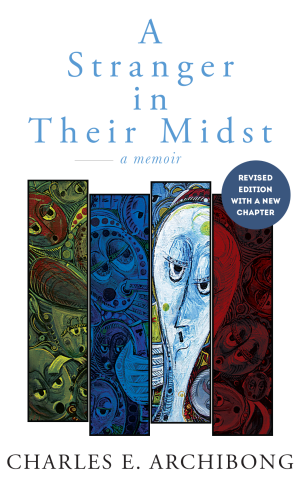
A Stranger in their Midst: A Memoir (2nd Edition)
Charles E. Archibong was elevated to the bench of the Federal High Court of Nigeria in 2002—the primary superintending forum of Nigeria’s federal system, with jurisdiction over the executive activity of the federal government and all its agencies.
This book details matters that came before Archibong during his time as a Federal Judge. His characteristic approach to adjudication was a decided bent toward speedy conclusion of proceedings before him. These cases ranged from the abduction of a sitting state governor, the recall of the Deputy President of the Nigerian Senate, a trial of activists of the Movement for the Actualization of the Sovereign State of Biafra (MASSOB), to pushing through trial a civil claim against federal authorities over publication of an air accident report, oil magnates and communication czars tangling with their creditors. The stories are told with the skill and pathos of an excellent writer.
Things reach a climax when Justice Archibong collides with senior lawyers engaged on behalf of the Economic and Financial Crimes Commission to conduct a major criminal trial, and about the same time the Judge gets caught in the crossfire of feuding political bigwigs litigating for the control of party political structures. These conflicts will lead to the premature termination of his judicial career.
₵135.00 -
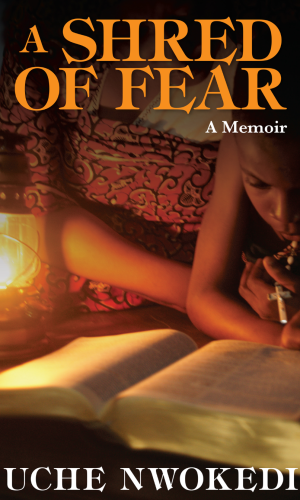
A Shred of Fear: A Memoir (Hardcover)
Fifty years after the Biafran War ended in 1970, and as memories of the war fade and cultural, religious and tribal divisions rear their heads, Uche Nwokedi’s childhood memories of that time are presented in this memoir. Aged seven when the war began, he and his family would spend the next three years as refugees in their own country. A Shred of Fear brings dramatic events vividly to life. Moments of fear, sadness, tragedy, and family solidarity are told with pathos and humour. More than a war story, this compelling narrative shines a fearless light on a dark period.
“Powerful and endearing. Uche Nwokedi’s A Shred of Fear is an open invitation to consider his boyhood memories of the Biafran War, told from his perspective as a man who also bore witness to its antecedents and aftermath. This is an inspiring book that is sure to mend bridges.” – Sefi Atta, Author, Everything Good Will Come
“As one who participated fully in the Biafra War, A Shred of Fear is a powerful and vivid factual recollection of events that defined the war for the author. Written with such brilliant simplicity, one is taken on a journey of the changes in life in a time of war by the author. A must read. Highly recommended!” – Chief Arthur Mbanefo FCA, MFR, CON, Commissioner/Roving Ambassador in Biafra (1967-1970); Nigeria’s Permanent Representative to the United Nations (1999-2003)
“A Shred of Fear is a beautifully evocative work that reveals the inimitable but understated role of the many women who confronted the war-within a war marked by hunger, agony and death. Rich in style and language, and full of humour, Uche Nwokedi’s writing is an emotionally wrenching, cross-over read.” – Yinka Olatunbosun, Journalist
₵150.00 -
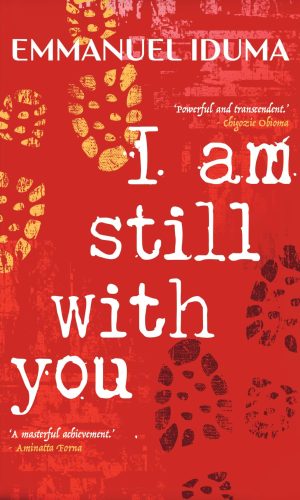
I Am Still With You
“Epic and intimate.” – Margo Jefferson, Author of Negroland
Emmanuel Iduma never met his uncle, his father’s favourite brother and the man for whom he is named. The elder Emmanuel left home in 1967 to fight in the Biafran War and was not seen again. The war lasted for three years, with young Igbo men volunteering to fight for a breakaway republic in the chaotic wake of British decolonization. Around one hundred thousand others who fought in the war shared similar fates to Emmanuel’s uncle, though there are no official records of these losses. The tensions that gave rise to the conflict remain, threatening sometimes to bubble over. In this landscape, there are no monuments or graves. Instead, a collective remembering remains, for the most part, silent.
I Am Still With You sees a young Nigerian return to his country of birth. Travelling the route of the war, Iduma explores both a national history and the mysteries of his own family, finding both somewhat scarred and haunted, the memories warped by time and the darkest parts left for decades unspoken.
₵145.00I Am Still With You
₵145.00 -
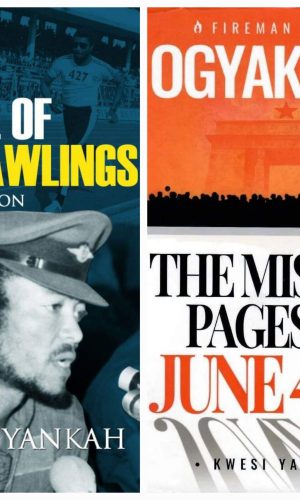
Bookset: The Trial of J.J. Rawlings & Ogyakrom: The Missing Pages of June 4th (2 books)
Two prolific writers, brothers. One tumultuous period in Ghana’s history. One significant personality.Same perspectives or different? Get this set and find out.About the Trial of JJ Rawlings
The Trial of JJ Rawlings narrates the extraordinary circumstances under which a young military officer Flt Lt JJ Rawlings, later to become the longest serving Head of State of Ghana, shot into the limelight to change the course of Ghana’s history and political development.The first edition of the book, originally published in 1986, completely sold out within a year, making this second edition very welcome in response to public request.
This volume is a valuable contribution to our understanding of those ineluctable forces that have changed the contours of our society. Surely, the story of JJ, well told in this volume, cannot fail to grip and hold the reader’s most concentrated attention. – Prof F.A. Botchwey, PhD
About Ogyakrom: The Missing Pages of June 4th
The present volume represents landmarks within 22 months of Yankah’s weekly column in The Catholic Standard, from January 1979 to March 1980. It is inspired by topical issues in two military regimes (General F Akuffo’s SMC 2, Rawlings’ June 4th Revolution) and one civilian government (Hilla Limann’s PNP). This compilation altogether allows a veiled peep into the most turbulent period in Ghana’s political history, Rawlings’ June 4th Revolution, including preceding events and the aftermath of the Revolution. In the words of Dr Anthony Bonnah Koomson, Editor of The Catholic Standard at the time of Yankah’s celebrated column: “The book captures a momentous era in Ghana’s immediate political history, reminiscences of which the author has sough to recreate and preserve with phenomenal linguistic skill. It presents, through satire, an accurate heartbeat of a people under intense political paralysis.”
This book makes compelling, even if hilarious, reading on Ghana’s enigmatic June 4th Revolution.
₵170.00₵175.00 -
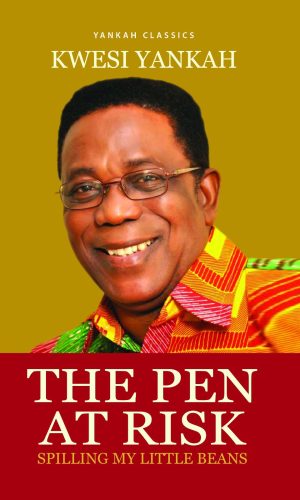
The Pen at Risk: Spilling My Little Beans
“The Pen at Risk is more than a memoir. It is a piece of authentic, ungarnished history by a writer and public intellectual who is too modest to accept the title of a historian, but who witnessed and chronicled the most intriguing epochs of Ghana’s national life. Laced with the innate Fante humour, this book is a piece of deep but entertaining non-fiction that is told with the demystified simplicity of one of Ghana’s greatest academics and writers. Kwesi Yankah is a gift to humanity, and this memoir is a greater gift to an unfortunate generation like mine that did not live in the era of the incisive writings of the great Kwatriot.” – Manasseh Azure Awuni, Editor-in-Chief, The Fourth Estate
“When a citizen who has spent his whole life scrutinising society, turns the spotlight on himself, the risks include this epic engagement that spares no one, him included. In this bare-it-all memoir, the Yankah enigma is fully bared, warts and all. As it turns out, Yankah has had more than his fair share of privileged roles, ultimately impacting the national narrative. The richness of ethnography here, is as riveting as his urban-savvy accounts of the intrigues of university and national politics. While we watch him weave his wizardry of words, we are also awed by the totality of his humanity. The Pen at Risk is a hilarious package of eruditions. It is about the exalted gossips of our Motherland. The narratives are so sweet they hurt. If this isn’t the best book you have read in years, call me illiterate.” – Kofi Akpabli, Scholar, Author, Journalist
“In this memoir, Kwesi Yankah delivers a sparkling tableau of key aspects of his life, tabling his charmed childhood and amazing trajectory as an academic. He then rolls out his long stint as an audacious social commentator and columnist for leading papers (which may have put his pen at risk). With a penmanship characterized by a keen eye for detail, this autobiography is an entertaining and captivating book that should be read by all interested in media and social history as well as autobiography as a literary genre.” – Professor Mansah Prah, University of Cape Coast
“Intriguing, revealing, and brilliant. The Pen at Risk is unvarnished introspection beautifully strung together with anecdotes in a way that is vibrant and colorful. Kwesi Yankah’s work is a refreshingly modest invitation to see life through a different lens, even for a fleeting moment.” – Dr Obeng Amoako Edmonds, University of Southern California, Los Angeles, California
₵250.00 -
The Pen-Pictures of Modern Africans and African Celebrities by Charles Francis Hutchison: A Collective Biography of Elite Society in the Gold Coast Colony
In the late 1920s the Gold Coast businessman Charles Francis Hutchison published the first volume of his book titled The Pen-Pictures of Modern Africans and African Celebrities. The book contains 162 biographical sketches of Ghanaians that were important in business, in society and the church, in government, and in (nationalist) politics, both from Hutchison’s own time and from the nineteenth century. The text of the biographies is in blank verse, and portrait photographs accompany most sketches. Additional photographs of houses and special events, and added biographical information in the form of lists of famous deceased people complete the book.
The Pen-Pictures is a well-known source for the history of the Gold Coast, modern Ghana, cited and quoted by both professional historians and interested lay-people. In effect, The Pen-Pictures is an important socio-historical document. The format, the style of presentation, the intimacy of many of the life histories, the overview offered of non-European Gold Coast society in the 1920s, they all allow for multiple analyses by historians, sociologists, social anthropologists and scholars of language and literature.
This annotated edition is the first reprint of the book and offers a lively and both historically and literarily interesting text about an important phase in Ghanaian history. The added introduction and annotation offer a context hitherto unavailable to the scholar and general reader.
₵470.00 -
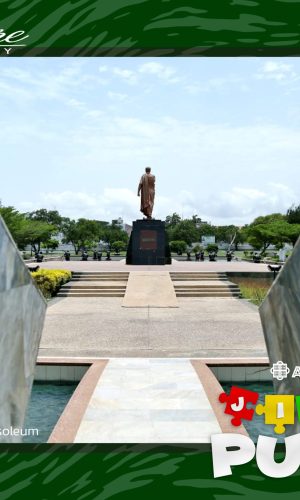
Abusua Pa Jigsaw Puzzle: Nkrumah Mausoleum (216 Puzzle Pieces) – Pre-Order
The Nkrumah Mausoleum in Accra, Ghana, is a significant landmark honouring Dr. Kwame Nkrumah, Ghana’s first President and a key figure in the country’s independence movement. It serves as a tribute to Nkrumah’s legacy and houses a museum showcasing his life and achievements.
The mausoleum is architecturally significant, symbolizing Ghana’s quest for freedom with its black star-shaped design. It stands as a symbol of Pan-Africanism and is an important educational resource for understanding Ghana’s history and Nkrumah’s contributions. The mausoleum also hosts commemorative events, preserving the memory and ideals of Nkrumah and his role in Ghanaian and African history.
₵450.00 -
Abusua Pa Jigsaw Puzzle: Ghana’s Coastline (140 Puzzle Pieces) – Pre-Order
Ghana’s Coastline is dotted with stunning beaches, offering a mix of natural beauty and recreational activities. In this picture we find a boy playing on the beaches of Sanzule. Labadi Beach in Accra is popular and vibrant, while Busua Beach in the Western Region is known for its golden sands and surfing opportunities. Kokrobite Beach near Accra has a bohemian atmosphere and lively nightlife.
The Ada area features beaches along the Volta estuary, ideal for water activities. Anomabo Beach in the Central Region is tranquil and historically significant, and Axim Beach in the Western Region offers serene setting. Cape Coast Beach combines history with natural beauty. These beaches showcase Ghana’s coastal splendour, providing opportunities for relaxation, water sports and cultural experiences.
₵450.00