-
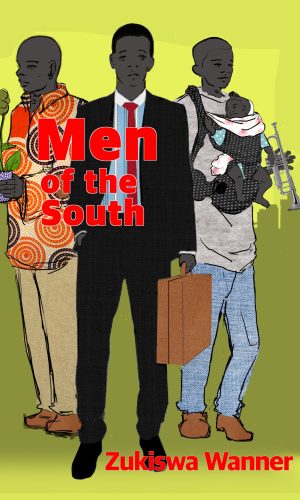
Men of the South
In Johannesburg three men’s lives revolve around one woman. Mfundo is a struggling jazz musician. All hope of ever becoming famous end when he gets into a macho fight with an international R&B artist. No one is keen to employ him any longer, and Mfundo takes the role of house-husband. But his girlfriend Sli is not willing to be the ‘man’ of the house. Mzilikazi is a gay man in a heterosexual marriage. One of the few people in his life who do not question the decision he makes is his best friend, Sli. Tinaye is a Zimbabwean struggling to gain citizenship in South Africa hence his current situation – underpaid and overqualified. The only way to gain citizenship is to marry Grace. But then he meets Sli…
₵135.00Men of the South
₵135.00 -
Africa Writes Back: The African Writers Series & the Launch of African Literature
June 17, 2008, is the fiftieth anniversary of the publication of Chinua Achebe’s Things Fall Apart by Heinemann. This publication provided the impetus for the foundation of the African Writers Series in 1962 with Chinua Achebe as the editorial adviser. This narrative, drawing liberally on the correspondence with the authors, concentrates on the adventurous first twenty-five years.
Africa Writes Back: The African Writer’s Series & the Launch of African Literature captures the energy of literary publishing in a new and undefined field. Portraits of the leading characters and the many consultants and readers providing reports and advice to new and established writers make Africa Writes Back a stand-out book. James Currey’s voice and insights are an added bonus.
₵55.00 -
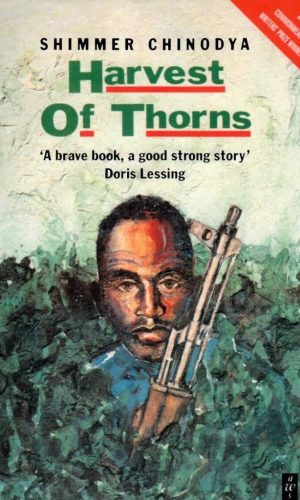
Harvest of Thorns (African Writers Series)
The revolution that ended white minority rule in Rhodesia (now Zimbabwe) is seen here chiefly through the eyes of Benjamin Tichafa, a young guerrilla. He is the son of a devoutly religious couple, his father a government messenger completely subservient to his white superiors. Enraged by the treatment of blacks, a teenage Benjamin turns from his parents’ apolitical religion. After being arrested in a demonstration, he joins the revolution.
The novel is enriched by the viewpoints of black Rhodesians who, out of fear or for economic reasons, do not fully support the struggle. The slaying of a dictatorial white farm owner dismays his foreman, whose livelihood is now threatened. The fatal beating of a woman who reluctantly informed on the guerrillas raises misgivings in Benjamin’s outfit. Though ultimately portraying the victory as worthwhile, Chinodya also shows the price paid in lives, tattered families and lost traditions. The result is a humane and penetrating look at a brutal government and a bloody revolution.
Harvest of Thorns is a novel of great significance which will give all those who read it a greater understanding of the road along which Zimbabwe has travelled, as well as indicate many of the directions ahead.
₵45.00 -
The Gonjon Pin and Other Stories: The Caine Prize for African Writing 2014
The Caine Prize for African Writing 2014 brings together the five shortlisted authors’ stories along with 12 other stories from the best new writers. Insightful, arresting and entertaining – this collection reflects the richness and range of current African writing.Caine Prize 2014 Shortlisted Stories:
Phosphorescence Diane Awerbuck (South Africa)
Chicken Efemia Chela (Ghana/Zambia)
The Intervention Tendai Huchu (Zimbabwe)
The Gorilla’s Apprentice Billy Kahora (Kenya)
My Father’s Head Okwiri Oduor (Nigeria)The Caine Prize African Writers’ Workshop Stories 2014:
The Lifebloom Gift Abdul Adan (Somalia/Kenya)
The Gonjon Pin Martin Egblewogbe (Ghana)
As A Wolf Sweating Your Mother’s Body Clifton Gachagua (Kenya)
Pam Pam Lawrence Hoba (Zimbabwe)
Lily in the Moonlight Abubakar Adam Ibrahim (Nigeria)
Running Elnathan John (Nigeria)
The Murder of Ernestine Masilo Violet Masilo (Zimbabwe)
All the Parts of Mi Isabella Matambanadzo (Zimbabwe)
Blood Work Barbara Mhangami-Ruwende (Zimbabwe)
The Sonneteer Philani A Nyoni (Zimbabwe)
Eko Hotel Chinelo Okparanta (Nigeria)
Music from a Farther Room Bryony Rheam (Zimbabwe)₵40.00₵45.00 -
Gathering Seaweed: African Prison Writing (African Writers Series)
This anthology introduces the African literature of incarceration to the general reader, the scholar, the activist and the student. The visions and prison cries of the few African nationalists imprisoned by colonialists, who later became leaders of their independent dictatorships and in turn imprisoned their own writers and other radicals, are brought into sharper focus, thereby critically exposing the ironies of varied generations of the efforts of freedom fighters.
Extracts of prose, poetry and plays are grouped into themes such as arrest, interrogation, torture, survival, release and truth and reconciliation.
Contributors include: Kunle Ajibade, Obafemi Awolowo, Steve Biko, Breyten Breytenbach, Dennis Brutus, Nawal El Saadawi, M J Kariuki, Kenneth Kaunda, Caesarina Kona Makhoere, Nelson Mandela, Emma Mashinini, Felix Mnthali, Augustino Nato, Ngugi wa Thiong’o, Kwame Nkrumah, Abe Sachs, Ken Saro Wiwa, Wole Soyinka, and Koigi wa Wamwere.
Although an often harrowing indictment of the history, culture and politics of the African continent and the societies from which this literature comes, the anthology presents excellent prose, poetry and drama, which stands up in its own right as serious literature to be cherished, read and studied.
₵45.00 -
Can We Talk And Other Stories (African Writers Series)
Shimmer Chinodya, winner of the 1989 Commonwealth Writers Prize (Africa region) is one of Zimbabwe’s foremost fiction writers. This collection of short stories reveals his development as a writer of passionate questioning integrity.
The first stories, ‘Hoffman Street’ and ‘The Man who Hanged Himself’ capture the bewildered innocence of a child’s view of the adult world, where behaviour is often puzzling and contradictory; stories such as ‘Going to See Mr B.V.’ provide the transition between the world of the adult and that of the child where the latter is required to act for himself in a situation where illusions founder on a narrow reality. ‘Among the Dead’ and ‘Brothers and Sisters’ look wryly at the self-conscious, self-centred, desperately serious world of young adulthood while ‘Playing your Cards’, ‘The Waterfall’, ‘Strays’ and ‘Bramson’ introduce characters for whom ambition, disillusion, and disappointment jostle for attention in a world where differences of class, culture, race and morality come to the fore. Finally, in ‘Can we Talk’ we conclude with an abrasive, lucid, sinewy voice which explores the nature of estrangement. The charge is desolation. Can we Talk and Other Stories speaks of the unspoken and unsaid. The child who watches but does not understand, the young man who observes but cannot participate, the man who stands outside not sure where his desires and ambitions lead, the older man, estranged by his own choices. ‘Can we Talk’ is not a question but a statement that insists on being heard, and demands a reassessment of our dreams.
₵45.00